
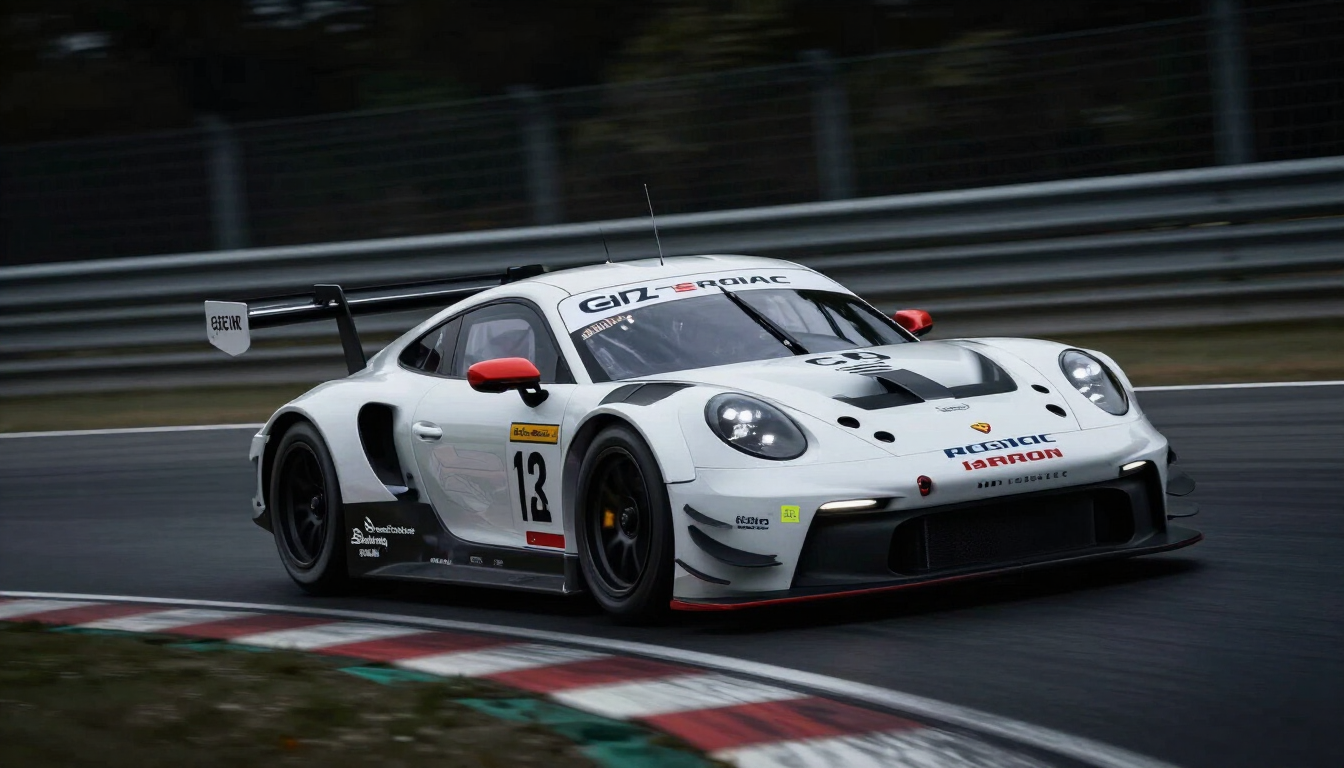
Every season, the BoP debate consumes more column inches than the racing. We went to the people who build it to understand what it is actually trying to do.
Balance of Performance is the process by which competing cars of different specifications are adjusted to produce similar lap times. It is applied by the governing body using a combination of circuit data, tyre test results, manufacturer submissions, and a simulation model developed over the course of several seasons. It produces decisions that every team simultaneously believes are wrong in the other cars' favour.
The fundamental tension in BoP is between the interests it is supposed to serve. Manufacturers want their cars to be competitive enough to win, because wins sell road cars and justify the investment. Teams want their cars adjusted to compensate for genuine performance shortfalls. Drivers want cars that feel balanced and predictable, which is not always the same as a car that is fast on the stopwatch. The governing body wants a grid that is close enough to produce overtaking and close enough to generate unpredictable results.
In practice, the process involves collecting sector time data from every race and comparing actual performance to pre season simulation outputs. Where a car consistently outperforms the model, its adjustment parameters are revised, usually through minimum weight, restrictor size, or maximum boost pressure. The changes are small by design. A BoP adjustment that is too aggressive produces instability that makes the next round harder to manage.
The teams that complain loudest about BoP are usually the ones closest to winning, which is a structural feature of the process rather than a flaw in it. A car that is quick enough to compete for wins will always attract scrutiny. The teams that rarely complain are the ones whose cars are uncompetitive for reasons BoP cannot fix: chassis stiffness, aero downforce, or driver quality.
The honest version of BoP is this: it is an imperfect tool for managing an inherently imperfect situation. It does not always get the balance right. It is revised regularly and transparently. And it produces, on average, closer racing than would exist without it. Whether that tradeoff is worth the debate it generates is a question for the category managers. What the data shows is that the debate itself is part of the product.
The 2026 GT World Challenge Europe standings capture the state of play recorded After Round 5, Paul Ricard. Charles Weerts / Dries Vanthoor leads the drivers classification on 148 points, 17 clear of Raffaele Marciello / Timur Boguslavskiy on 131, with Jules Gounon / Mattia Drudi third on 124. A lead of 17 points is a meaningful cushion at this stage of the year, but with 3 rounds still to run it is not yet a decisive one. The championship will be settled by how the front runners negotiate the rounds that remain, not by the margin they carry into them.
Behind the leading group the field is tightly compressed. Maxime Martin / Edoardo Mortara holds fourth on 118, Kevin Estre / Neel Jani is fifth on 112, and Nico Müller / Dan Harper completes the top six on 105. The spread across those three positions is just 13 points, which means a single strong weekend can reshape the order behind the title contenders. The midfield battle is where the championship depth is most visible, and where the cost of one bad round is highest.
In the teams classification, Team WRT BMW leads on 284 points from Akkodis ASP Mercedes on 261 and ROWE Racing BMW on 249. The teams standings are often the more reliable indicator of outright pace, because they smooth out the individual bad weekends that every driver encounters across a full season. A team that places both its entries consistently in the points will accumulate constructors score at a rate that single car brilliance cannot match.
The depth of the teams championship reflects how competitive the GT Racing grid has become. Team WRT BMW holds the lead on 284 points, but the gap to Akkodis ASP Mercedes on 261 is small enough that a single double points finish can close it. Behind them, ROWE Racing BMW sits third on 249, close enough to capitalise if either of the top two stumbles. The constructors race is a long game, and it rewards reliability over heroics.
The recent rounds have done most to shape the current standings. Circuit de Cataluña at Barcelona, Spain was won by ROWE Racing #99, Nürburgring at Nürburgring, Germany went the way of Iron Lynx #71, and the most recent completed round, Paul Ricard at Circuit Paul Ricard, France, was won by Porsche Penske #92. Each of those results shifted the points arithmetic at the top and reset the momentum that the title contenders carry into the next weekend.
The form guide across the recent rounds reads as a study in momentum. Porsche Penske #92 took the most recent victory at Circuit Paul Ricard, France, Iron Lynx #71 won at Nürburgring, Germany before that, and ROWE Racing #99 prevailed at Barcelona, Spain. No single driver has dominated the recent sequence, which is why the points lead at the top has remained stable rather than stretching. The closing rounds will decide whether that pattern holds or one contender finally strings together the run of results that settles the title.
The next round is Monza at Autodromo di Monza, Italy, scheduled for 5, 7 Sep. It is round 6 of the season and the first of the closing stretch. How the championship leader handles the specific technical demands of Autodromo di Monza, Italy will indicate whether the current margin is a foundation to build on or a high water mark that the chasing group can erode. Every remaining weekend now carries championship weight.
The 2026 GT World Challenge Europe calendar runs to 8 rounds. So far 5 rounds are complete, leaving 3 to decide the title. Across the completed rounds the championship has tested its contenders on a range of layouts, surfaces and conditions, and the standings reflect which driver has coped with that variety most consistently. The rounds still to come will ask different questions, and the answers will determine the champion.
The points structure means a maximum weekend is worth substantially more than the current lead at the top. With 17 points separating first from second and 3 rounds remaining, the leader can absorb an off weekend and still retain position, provided the closest rival does not take maximum score. That arithmetic shapes how the front runners approach risk in the closing rounds, where a conservative finish can be worth more than a speculative win.
The competitive spread at the front is narrow. The top three are covered by 24 points and the top six by 43. In a field this close, consistency is proving more valuable than outright speed, and the championship is trending towards the contender who minimises the bad weekends rather than the one who maximises the good ones. The margin between a title and a near miss is measured in finishes, not victories.