
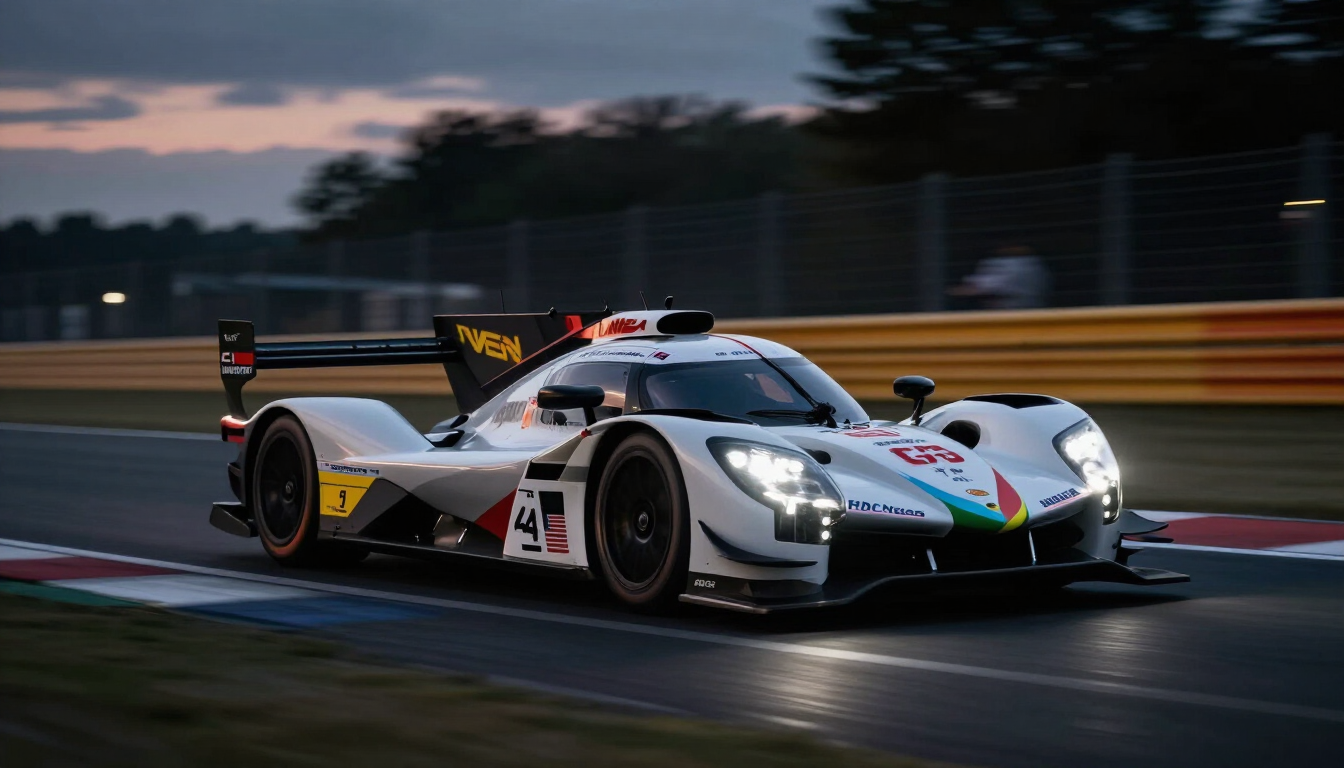
The LMGT3 class is won and lost in the bronze driver stints. Understanding why, and what makes a bronze driver competitive, changes how you watch endurance racing.
The FIA's driver grading system runs from Bronze to Platinum, based on a combination of racing history, results, and a senior driver assessment. In LMGT3, at least one Bronze driver per car is mandatory for a minimum percentage of the race distance. The intent is developmental and inclusive. The strategic effect is decisive.
A competitive Bronze driver at Le Mans is not a slow one. The benchmark pace deficit against the fastest Pro driver in the class is typically between 1.5 and 2.5 percent, at Circuit de la Sarthe, that translates to approximately two to three seconds per lap on a four minute circuit. Over a triple stint of three hours, that is an accumulated deficit of between 180 and 270 seconds, before accounting for the traffic management advantage that a more experienced driver can generate.
The teams that win LMGT3 championships are almost always the ones who have identified a Bronze driver whose deficit is in the lower half of that range and whose consistency, lap variance, incident frequency, tyre management, is comparable to the Silver and Gold drivers on their roster. The search for that driver is now as strategically important as the search for a fast Pro. An average Bronze driver can cost a team a class win even in a car that is technically superior.
Development plays a major role. The most competitive Bronze drivers in the class have typically been on structured manufacturer programmes for two or more years, circuit specific coaching, simulator preparation, a dedicated engineer who understands where the time is being lost. The improvement curve from a first Le Mans start to a third is significant. Teams that invest in the development process find the return on the stopwatch.
The result at the most recent round confirmed the pattern: the winning LMGT3 car was not the fastest in the class on raw pace. It was the car with the smallest performance variance across all three driver categories. The Bronze driver's fastest and slowest stints were separated by four seconds per lap. The second placed car's Bronze driver's range was twelve seconds. Four laps of difference, compounded across seven hours, determined the class result.
The 2026 FIA World Endurance Championship standings capture the state of play recorded After Round 5, 6 Hours of São Paulo. René Rast / Robin Frijns leads the drivers classification on 75 points, level with Kobayashi / Conway / de Vries on 75, with Sheldon van der Linde third on 65. With the top two level on points, the championship is effectively open at the top, and the rounds still to run will decide it entirely. The championship will be settled by how the front runners negotiate the rounds that remain, not by the margin they carry into them.
Behind the leading group the field is tightly compressed. Pier Guidi / Giovinazzi / Calado holds fourth on 57, Hartley / Hirakawa / Buemi is fifth on 56, and Magnussen / Marciello completes the top six on 50. The spread across those three positions is just 7 points, which means a single strong weekend can reshape the order behind the title contenders. The midfield battle is where the championship depth is most visible, and where the cost of one bad round is highest.
In the teams classification, BMW M Team WRT leads on 190 points from Toyota Gazoo Racing on 131 and Ferrari AF Corse on 117. The teams standings are often the more reliable indicator of outright pace, because they smooth out the individual bad weekends that every driver encounters across a full season. A team that places both its entries consistently in the points will accumulate constructors score at a rate that single car brilliance cannot match.
The depth of the teams championship reflects how competitive the FIA WEC grid has become. BMW M Team WRT holds the lead on 190 points, but the gap to Toyota Gazoo Racing on 131 is small enough that a single double points finish can close it. Behind them, Ferrari AF Corse sits third on 117, close enough to capitalise if either of the top two stumbles. The constructors race is a long game, and it rewards reliability over heroics.
The recent rounds have done most to shape the current standings. 6 Hours of Spa at Spa Francorchamps, BEL was won by BMW #20, 24 Hours of Le Mans at Circuit de la Sarthe, FRA went the way of Toyota #7, and the most recent completed round, 6 Hours of São Paulo at Interlagos, Brazil, was won by BMW #15. Each of those results shifted the points arithmetic at the top and reset the momentum that the title contenders carry into the next weekend.
The form guide across the recent rounds reads as a study in momentum. BMW #15 took the most recent victory at Interlagos, Brazil, Toyota #7 won at Circuit de la Sarthe, FRA before that, and BMW #20 prevailed at Spa Francorchamps, BEL. No single driver has dominated the recent sequence, which is why the points lead at the top has remained stable rather than stretching. The closing rounds will decide whether that pattern holds or one contender finally strings together the run of results that settles the title.
The next round is Lone Star Le Mans at COTA, Austin TX, scheduled for 4, 6 Sep. It is round 6 of the season and the first of the closing stretch. How the championship leader handles the specific technical demands of COTA, Austin TX will indicate whether the current margin is a foundation to build on or a high water mark that the chasing group can erode. Every remaining weekend now carries championship weight.
The 2026 FIA World Endurance Championship calendar runs to 8 rounds. So far 5 rounds are complete, leaving 3 to decide the title. Across the completed rounds the championship has tested its contenders on a range of layouts, surfaces and conditions, and the standings reflect which driver has coped with that variety most consistently. The rounds still to come will ask different questions, and the answers will determine the champion.
With the top two level on points and 3 rounds remaining, neither contender can absorb an off weekend without surrendering position. That arithmetic shapes how the front runners approach risk in the closing rounds, where a conservative finish can be worth more than a speculative win, and where a single non score could decide the title.