
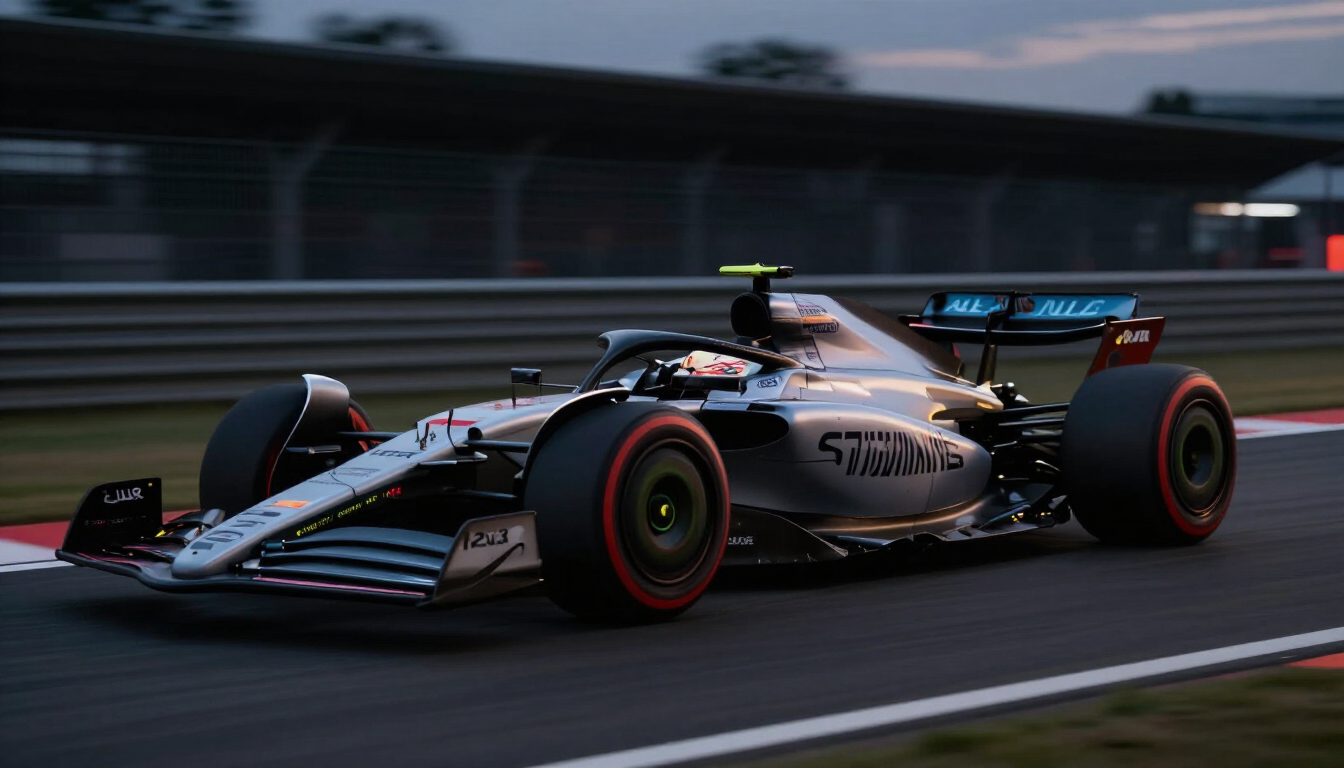
Twenty four races. Fewer original stories than at ten. The Formula 1 media machine is producing more content with less substance, and the sport is normalising it.
The Formula 1 press conference format has not changed meaningfully in twenty years. Fifteen minutes, three drivers, a moderator who asks the same questions the journalists in the room were planning to ask, and a broadcast arrangement that cuts away before anything becomes genuinely uncomfortable. The calendar has expanded from sixteen races to twenty four. The press conference format has produced no additional insight.
The paddock media contingent is larger than it has ever been. So is the volume of content produced per race weekend. What has not expanded proportionally is the number of stories that could only have been reported from inside the paddock, stories that require access, trust, context, and time. The ratio of analysis to intelligence has inverted. There is more data, less understanding.
This is not a complaint about digital media or content volume. It is an observation about editorial resource allocation. The outlets that produce the most content per weekend, the ones that file fifty pieces between Thursday media day and Sunday race report, are the ones least likely to have a reporter embedded with an engineering group or in a position to develop the off record relationship that produces the story the press conference will never surface.
The audiences have noticed. Engagement metrics for original reporting, longer reads, higher return visit rates, consistently outperform the metrics for aggregated press release content. The demand for substance is real. The production capacity is being allocated elsewhere, because quantity is easier to measure than quality and easier to sell to programmatic advertising partners.
Twenty four races. Each one has five or six genuine stories, strategy, engineering, human, political, that would require a full working week to report properly. Across the season, that is approximately one hundred and forty original stories. The sport produces, collectively, several thousand pieces of content per weekend. The gap between what is possible and what is being attempted is wide. It will not narrow until the economics of motorsport journalism change. We are working on our part of that.
The 2026 Formula 1 World Championship standings capture the state of play recorded After Round 11, Hungarian Grand Prix. Kimi Antonelli leads the drivers classification on 219 points, 50 clear of Lewis Hamilton on 169, with George Russell third on 160. A lead of 50 points is a meaningful cushion at this stage of the year, but with 12 rounds still to run it is not yet a decisive one. The championship will be settled by how the front runners negotiate the rounds that remain, not by the margin they carry into them.
Behind the leading group the field is tightly compressed. Charles Leclerc holds fourth on 138, Lando Norris is fifth on 128, and Max Verstappen completes the top six on 109. The spread across those three positions is just 29 points, which means a single strong weekend can reshape the order behind the title contenders. The midfield battle is where the championship depth is most visible, and where the cost of one bad round is highest.
In the teams classification, Mercedes leads on 468 points from Ferrari on 346 and McLaren on 287. The teams standings are often the more reliable indicator of outright pace, because they smooth out the individual bad weekends that every driver encounters across a full season. A team that places both its entries consistently in the points will accumulate constructors score at a rate that single car brilliance cannot match.
The depth of the teams championship reflects how competitive the Formula 1 grid has become. Mercedes holds the lead on 468 points, but the gap to Ferrari on 346 is still the clearest constructors story of the season. Behind them, McLaren sits third on 287, with Red Bull Racing fourth on 204. The constructors race is a long game, and it rewards reliability over heroics.
The recent rounds have done most to shape the current standings. British Grand Prix at Silverstone was won by Leclerc, Belgian Grand Prix at Spa Francorchamps went the way of Antonelli, and the most recent completed round, Hungarian Grand Prix at Budapest, was won by Norris. Each of those results shifted the points arithmetic at the top and reset the momentum that the title contenders carry into the next weekend.
The form guide across the recent rounds reads as a study in momentum. Norris took the most recent victory at Budapest, Antonelli won at Spa Francorchamps before that, and Leclerc prevailed at Silverstone. No single driver has dominated the recent sequence, which is why the points lead at the top has remained stable rather than stretching. The closing rounds will decide whether that pattern holds or one contender finally strings together the run of results that settles the title.
The next round is Dutch Grand Prix at Zandvoort, scheduled for 21, 23 Aug. It is round 12 of the season and the first of the closing stretch. How the championship leader handles the specific technical demands of Zandvoort will indicate whether the current margin is a foundation to build on or a high water mark that the chasing group can erode. Every remaining weekend now carries championship weight.