
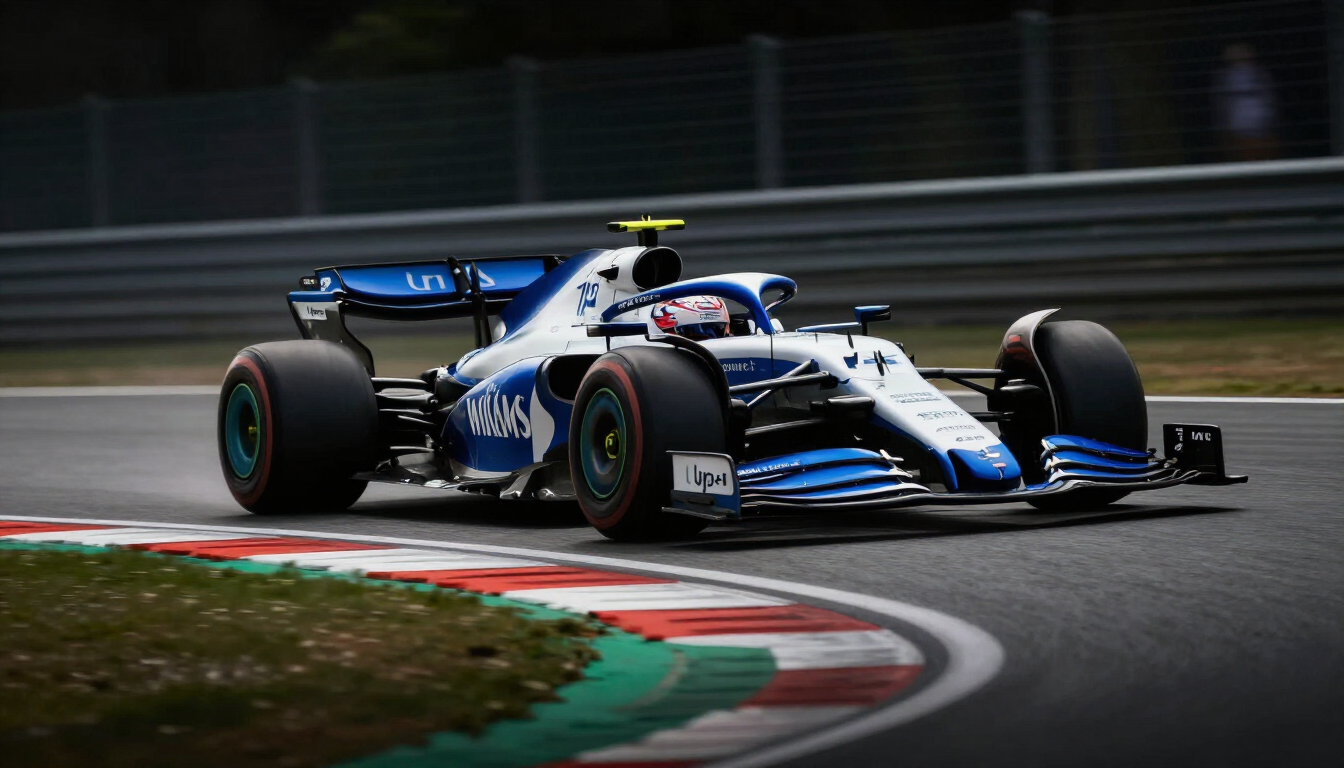
Carlos Sainz has committed his future to Williams on a new multi-year deal despite a difficult 2026 campaign. With Audi, Alpine, Mercedes and Red Bull all circling, was Grove really the best option available to the Spaniard?
Carlos Sainz has made his decision. Despite a difficult 2026 campaign for Williams, the Spaniard has committed his future to the Grove-based team on a new multi-year deal. The announcement comes just one day after Williams confirmed Alex Albon would also remain for 2027.
But there is one obvious question for Formula 1 fans: Was Williams really the best option available to Sainz? On paper, perhaps not.
When Sainz joined Williams from Ferrari for 2025, it was viewed as a calculated gamble. Williams had shown genuine signs of recovery under James Vowles, finishing fifth in the Constructors’ Championship in 2025, while Sainz himself delivered two podiums during his first season.
The expectation was that the major 2026 regulation changes could provide Williams with another opportunity to move towards the front. Instead, 2026 has been a reality check.
Williams has struggled badly for performance and reliability, finding itself near the bottom of the Constructors’ Championship. Sainz has openly expressed frustration with the lack of progress, even admitting that the team’s development had not reached the level expected. So why stay?
The alternatives were tempting
Sainz was not short of speculation surrounding his future.
Audi was repeatedly linked with the Spaniard as it looked to establish itself as a genuine factory operation. Alpine was also mentioned, while there was even speculation about a possible route back into the Red Bull family should circumstances change there.
And then there was the obvious question of Mercedes.
For a driver of Sainz’s experience and ability, sitting and waiting for a top seat to become available would have been understandable.
But that is precisely the problem.
None of those alternatives represented a guaranteed step forward.
Mercedes already had George Russell and Kimi Antonelli tied into its plans. Red Bull remained centred around Max Verstappen, while Audi was still building the foundations of its new works project.
Moving simply for the sake of moving could have left Sainz in exactly the same position, or potentially worse.
Sainz has something Williams cannot buy
There is another factor that perhaps matters more than people realise.
Sainz is not simply a driver at Williams anymore.
He has become part of the rebuild.
James Vowles has repeatedly praised his technical contribution, leadership and involvement with the team. Sainz has also made it clear that he believes in the Williams project and wants to help turn the team back into a front-running force.
That relationship has value.
At Ferrari, Sainz was ultimately replaced by Lewis Hamilton despite being one of the team’s strongest performers. At Williams, he is not merely another name on the driver roster.
He is one of the faces of the project.
And that could have played a huge role in his decision.
But there is a gamble here
Let’s not pretend this is risk-free.
Williams currently has a mountain to climb.
The 2026 season has exposed weaknesses that cannot simply be fixed by changing a front wing or bringing a new floor to a race weekend. The team needs to close a significant performance gap, and Sainz will be 32 in September 2026.
His window to fight for victories, and potentially a World Championship, is getting smaller.
That makes this decision particularly interesting.
Sainz isn’t choosing Williams because it is currently the fastest car.
He is betting that it will become one.
And that is a very different proposition.
Was the money a factor?
Almost certainly worth considering, although the exact financial terms of the new deal have not been publicly disclosed.
Reports before the announcement suggested Williams was prepared to make a significant financial commitment to retain Sainz.
But money alone doesn’t explain this decision.
Sainz has repeatedly talked about wanting to win and compete at the front. If he genuinely believed another team offered a significantly better sporting opportunity, it would be difficult to imagine a bigger contract being enough to convince him to stay.
The more likely explanation is that Sainz believes Williams’ current position does not represent its ultimate potential.
The biggest clue may be the 2027 regulations
Williams has something extremely valuable:
Mercedes power.
And with Albon now also confirmed for 2027, Williams has chosen stability rather than another driver reset.
That could prove crucial.
Formula 1 is entering another period of technical development, and Williams has the opportunity to build around two experienced drivers who already understand the organisation.
Sainz knows the engineers.
He knows Vowles.
He knows the weaknesses of the car.
And, perhaps most importantly, he knows what needs to change.
If Williams gets it right, Sainz could suddenly find himself in exactly the position he wanted when he left Ferrari: leading a team capable of fighting at the sharp end.
So, was there a better option?
Probably, but not necessarily a better guaranteed option.
Audi may eventually become a major force. Alpine could improve. Mercedes could have a seat available in the future. Red Bull remains Red Bull.
But all of those options carry uncertainty.
Williams carries uncertainty too, but Sainz knows exactly what he is getting.
And perhaps that is the key to this decision.
Carlos Sainz isn’t staying because Williams is currently good enough.
He’s staying because he believes Williams can become good enough.
That makes this one of the more fascinating gambles of his F1 career.
If James Vowles delivers, Sainz could look back on today’s decision as the moment he chose a future winner over an immediately attractive alternative.
If Williams fails to progress, however, the question will become much harsher:
Did Carlos Sainz sacrifice the final years of his prime waiting for a Williams revival that never came?
Only time will tell.
For now, though, Sainz has placed his faith in Grove.
And Formula 1 will be watching very closely to see whether that faith is rewarded.