
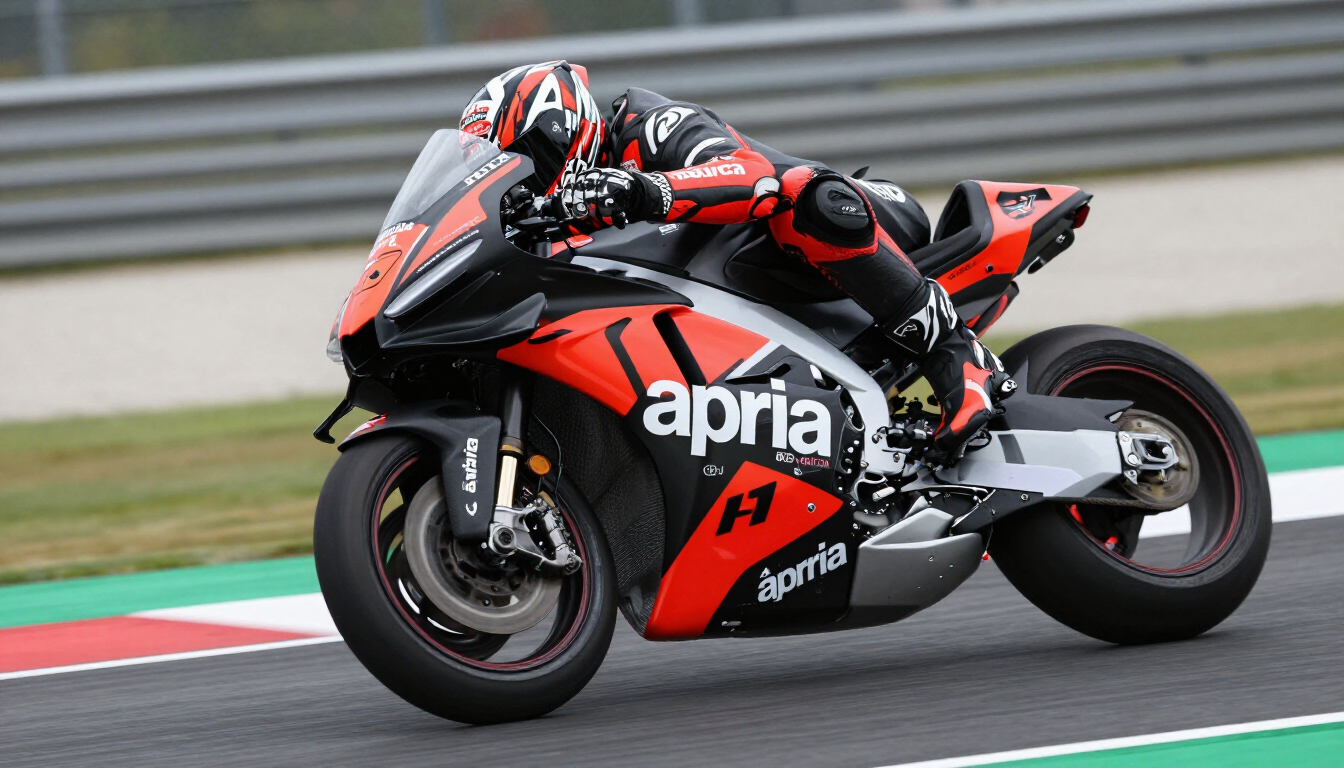
Two Italian manufacturers, two philosophies, one championship. The technical battle between Ducati and Aprilia is reshaping how MotoGP prototypes are designed and raced.
The paddock at Mugello was thick with rumour during practice for the Italian Grand Prix. Ducati, running the latest specification of their wings package on the Desmosedici GP26, were half a tenth quicker than Aprilia in sector one. Aprilia, running a revised front spoiler configuration that had appeared without announcement at the Catalan Grand Prix, were a tenth and a half quicker in sector three. In MotoGP, these margins are everything.
The aero war between Ducati and Aprilia is not new, it has been intensifying since Aprilia introduced winglets to their RS GP22 in 2022. What is new in 2026 is the scope of the arms race. Both manufacturers have extended their computational fluid dynamics programmes substantially, with each updating their aerodynamic packages at roughly every three races. The technical regulations permit aerodynamic updates within specified homologation windows, and both teams are using every window available.
Ducati's philosophy centres on peak downforce. The Desmosedici GP26 generates more aerodynamic load than any other motorcycle on the grid at maximum speed. Under hard braking from 340 km/h, the front end grip advantage is measurable and significant. The Ducati's braking performance is its primary competitive weapon, and the aerodynamic package is designed to maximise it.
Aprilia's approach is different. The RS GP26 prioritises stability across the speed range rather than peak values at either extreme. The aerodynamic surfaces generate less total downforce than the Ducati but maintain their effectiveness across a wider bandwidth of speeds and lean angles. On circuits where the speed range is more variable, medium speed corners followed by long straights, this bandwidth advantage translates directly into lap time.
The competition between the two philosophies will ultimately be decided by the calendar. The second half of the 2026 season features circuits that traditionally favour high speed machinery: Motegi with its fast infield complex, Phillip Island with its sweeping back section, Sepang with its long straights. Ducati's engineers know this. Aprilia's engineers know this too. The question is whether Aprilia's mid corner advantage can absorb the deficit at circuits that reward Ducati's braking strength. The answer will determine the 2026 world championship.
The 2026 MotoGP World Championship standings capture the state of play recorded After Round 11, German Grand Prix (Sachsenring). Jorge Martín leads the riders classification on 208 points, 14 clear of Ai Ogura on 194, with Marc Márquez third on 190. A lead of 14 points is a meaningful cushion at this stage of the year, but with 11 rounds still to run it is not yet a decisive one. The championship will be settled by how the front runners negotiate the rounds that remain, not by the margin they carry into them.
Behind the leading group the field is tightly compressed. Marco Bezzecchi holds fourth on 187, Fabio Di Giannantonio is fifth on 184, and Raúl Fernández completes the top six on 159. The spread across those three positions is just 28 points, which means a single strong weekend can reshape the order behind the title contenders. The midfield battle is where the championship depth is most visible, and where the cost of one bad round is highest.
In the teams classification, Aprilia Racing leads on 395 points from SuperFile Trackhouse MotoGP on 353 and Ducati Lenovo Team on 333. The teams standings are often the more reliable indicator of outright pace, because they smooth out the individual bad weekends that every rider encounters across a full season. A team that places both its entries consistently in the points will accumulate constructors score at a rate that single car brilliance cannot match.
The depth of the teams championship reflects how competitive the MotoGP grid has become. Aprilia Racing holds the lead on 395 points, but the gap to SuperFile Trackhouse MotoGP on 353 is small enough that a single double points finish can close it. Behind them, Ducati Lenovo Team sits third on 333, close enough to capitalise if either of the top two stumbles. The constructors race is a long game, and it rewards reliability over heroics.
Among the manufacturers, Aprilia leads on 748 points from Ducati on 726, with KTM third on 298. The manufacturer standings capture the underlying technical balance of the championship and track which factory has the strongest package across the widest range of circuits. The gap between the top two factories is the clearest measure of how close the technical battle really is.
The recent rounds have done most to shape the current standings. Czech Republic Grand Prix at Automotodrom Brno was won by Bagnaia, Dutch TT at TT Circuit Assen went the way of Ogura, and the most recent completed round, German Grand Prix at Sachsenring, was won by Marc Márquez. Each of those results shifted the points arithmetic at the top and reset the momentum that the title contenders carry into the next weekend.
The form guide across the recent rounds reads as a study in momentum. Marc Márquez took the most recent victory at Sachsenring, Ogura won at TT Circuit Assen before that, and Bagnaia prevailed at Automotodrom Brno. No single rider has dominated the recent sequence, which is why the points lead at the top has remained stable rather than stretching. The closing rounds will decide whether that pattern holds or one contender finally strings together the run of results that settles the title.
The next round is British Grand Prix at Silverstone Circuit, scheduled for 22, 24 Aug. It is round 12 of the season and the first of the closing stretch. How the championship leader handles the specific technical demands of Silverstone Circuit will indicate whether the current margin is a foundation to build on or a high water mark that the chasing group can erode. Every remaining weekend now carries championship weight.
The 2026 MotoGP World Championship calendar runs to 22 rounds. So far 11 rounds are complete, leaving 11 to decide the title. Across the completed rounds the championship has tested its contenders on a range of layouts, surfaces and conditions, and the standings reflect which rider has coped with that variety most consistently. The rounds still to come will ask different questions, and the answers will determine the champion.
The points structure means a maximum weekend is worth substantially more than the current lead at the top. With 14 points separating first from second and 11 rounds remaining, the leader can absorb an off weekend and still retain position, provided the closest rival does not take maximum score. That arithmetic shapes how the front runners approach risk in the closing rounds, where a conservative finish can be worth more than a speculative win.
The competitive spread at the front is narrow. The top three are covered by 18 points and the top six by 49. In a field this close, consistency is proving more valuable than outright speed, and the championship is trending towards the contender who minimises the bad weekends rather than the one who maximises the good ones. The margin between a title and a near miss is measured in finishes, not victories.
Across the completed rounds the pattern that separates the leader from the chasers is consistency rather than peak pace. Jorge Martín has accumulated 208 points through a sequence of measured finishes, while Ai Ogura on 194 has shown comparable speed on individual weekends but has not matched that reliability across the season. The championship rewards the rider who arrives at the final round with the fewest non scores, and that is where the current leader has built the advantage.
The closing stretch of the 2026 MotoGP World Championship is where championship positions harden. 11 rounds remain, and each one carries enough points to move a rider up or down the order by several places. The pressure shifts from building a lead to defending one, and the approach that won points in the middle of the season is not always the approach that secures a title in the final rounds. How the contenders adapt to that pressure is the story the remaining calendar will tell.
The circuits still to come demand different strengths from the field. British Grand Prix at Silverstone Circuit will test one set of requirements, and the rounds that follow will each favour a slightly different balance of setup and driving style. A championship leader whose advantage is built on versatility across circuit types is better placed than one whose points have come from a narrow band of favourable venues. The remaining calendar will expose which of the contenders has that range.