
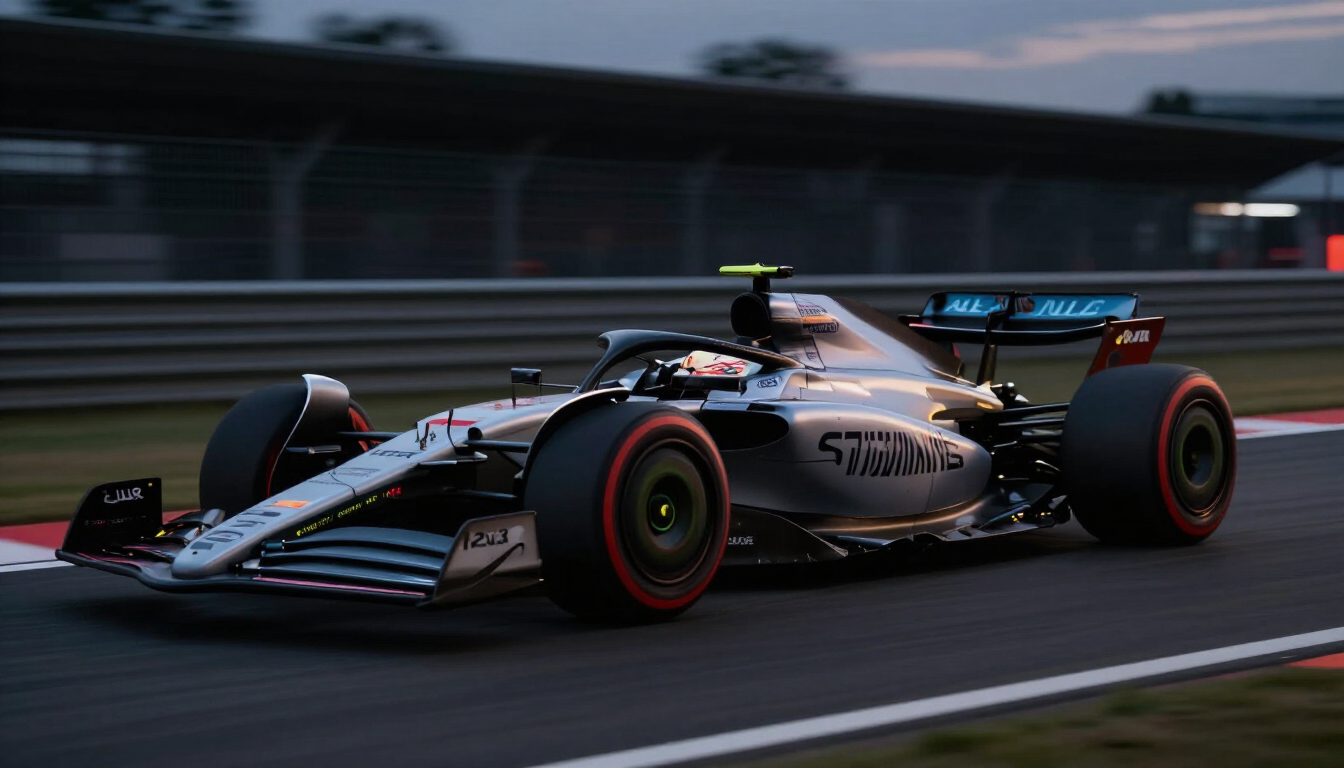
Liberty Media's second quarter results lay bare the scale of the financial damage caused by the postponement of the Bahrain and Saudi Arabian Grands Prix, with team payments falling 20 per cent in the first half of 2026.
The numbers are stark. Formula 1 teams received $127 million less in the first half of 2026 compared to the same period last year, according to Liberty Media's latest financial results. Team payments, excluding Concorde incentive payments, fell from $627 million in the first six months of 2025 to $500 million this year, a 20 per cent decline that tracks directly to the postponement of the Bahrain and Saudi Arabian Grands Prix due to the ongoing Middle East conflict.
The wider revenue picture is equally sobering. Formula 1 generated $764 million between April and June, a 38 per cent decline from the $1.22 billion reported in the second quarter of 2025. Only five races were held during that period, compared with nine in the same window the previous year. The Japanese Grand Prix, which moved forward into March, was counted in the first quarter rather than the second. Imola was removed from the calendar entirely. Operating income fell sharply from $293 million to $73 million, while adjusted operating income before depreciation and amortisation dropped from $361 million to $139 million.
For the teams, the financial implications are far reaching. The prize fund distribution model means that when race day revenues fall, team payments fall proportionally. A $127 million reduction across the grid is not an abstraction, it represents real cuts to operational budgets, development programmes, and in some cases, the ability to retain staff. For the midfield teams operating closest to the cost cap, the reduction creates genuine pressure on their ability to maintain competitive pace through the second half of the season.
The bigger teams are better insulated. Mercedes, Red Bull, Ferrari, and McLaren carry larger reserves and have commercial partnerships that supplement their prize fund income. But even for them, a 20 per cent reduction in payments represents a meaningful reduction in the financial resources available for development. The cost cap system was designed to constrain spending, not to manage revenue shortfalls of this magnitude.
Analysts had anticipated a significant impact. A Guggenheim Partners report released earlier in the season suggested that Formula 1 could lose roughly $200 million in annual revenue and approximately $80 million in EBITDA as a result of the Middle East disruptions. Liberty Media's results confirm that the damage is broadly in line with those projections, though the full year picture will depend on whether the postponed races can be rescheduled for the second half of the season.
Formula 1 CEO Stefano Domenicali has expressed hope that the Bahrain and Saudi Arabian rounds can be restored to the 2026 calendar in some form, with Imola and Sepang identified as potential replacement venues should direct rescheduling prove impossible. The commercial case for doing so is clear: each Grand Prix generates significant prize fund income, broadcast revenues, and promoter fees that cannot be recovered once a weekend is lost. The financial results of the first half of 2026 provide a compelling quantification of exactly what is at stake.
The 2026 Formula 1 World Championship standings capture the state of play recorded After Round 11, Hungarian Grand Prix. Kimi Antonelli leads the drivers classification on 219 points, 50 clear of Lewis Hamilton on 169, with George Russell third on 160. A lead of 50 points is a meaningful cushion at this stage of the year, but with 12 rounds still to run it is not yet a decisive one. The championship will be settled by how the front runners negotiate the rounds that remain, not by the margin they carry into them.
Behind the leading group the field is tightly compressed. Charles Leclerc holds fourth on 138, Lando Norris is fifth on 128, and Max Verstappen completes the top six on 109. The spread across those three positions is just 29 points, which means a single strong weekend can reshape the order behind the title contenders. The midfield battle is where the championship depth is most visible, and where the cost of one bad round is highest.
In the teams classification, Mercedes leads on 468 points from Ferrari on 346 and McLaren on 287. The teams standings are often the more reliable indicator of outright pace, because they smooth out the individual bad weekends that every driver encounters across a full season. A team that places both its entries consistently in the points will accumulate constructors score at a rate that single car brilliance cannot match.
The depth of the teams championship reflects how competitive the Formula 1 grid has become. Mercedes holds the lead on 468 points, but the gap to Ferrari on 346 is still the clearest constructors story of the season. Behind them, McLaren sits third on 287, with Red Bull Racing fourth on 204. The constructors race is a long game, and it rewards reliability over heroics.
The recent rounds have done most to shape the current standings. British Grand Prix at Silverstone was won by Leclerc, Belgian Grand Prix at Spa Francorchamps went the way of Antonelli, and the most recent completed round, Hungarian Grand Prix at Budapest, was won by Norris. Each of those results shifted the points arithmetic at the top and reset the momentum that the title contenders carry into the next weekend.
The form guide across the recent rounds reads as a study in momentum. Norris took the most recent victory at Budapest, Antonelli won at Spa Francorchamps before that, and Leclerc prevailed at Silverstone. No single driver has dominated the recent sequence, which is why the points lead at the top has remained stable rather than stretching. The closing rounds will decide whether that pattern holds or one contender finally strings together the run of results that settles the title.
The next round is Dutch Grand Prix at Zandvoort, scheduled for 21, 23 Aug. It is round 12 of the season and the first of the closing stretch. How the championship leader handles the specific technical demands of Zandvoort will indicate whether the current margin is a foundation to build on or a high water mark that the chasing group can erode. Every remaining weekend now carries championship weight.
The 2026 Formula 1 World Championship calendar runs to 23 rounds. So far 11 rounds are complete, leaving 12 to decide the title. Across the completed rounds the championship has tested its contenders on a range of layouts, surfaces and conditions, and the standings reflect which driver has coped with that variety most consistently. The rounds still to come will ask different questions, and the answers will determine the champion.
The points structure means a maximum weekend is worth substantially more than the current lead at the top. With 50 points separating first from second and 12 rounds remaining, the leader can absorb an off weekend and still retain position, provided the closest rival does not take maximum score. That arithmetic shapes how the front runners approach risk in the closing rounds, where a conservative finish can be worth more than a speculative win.