
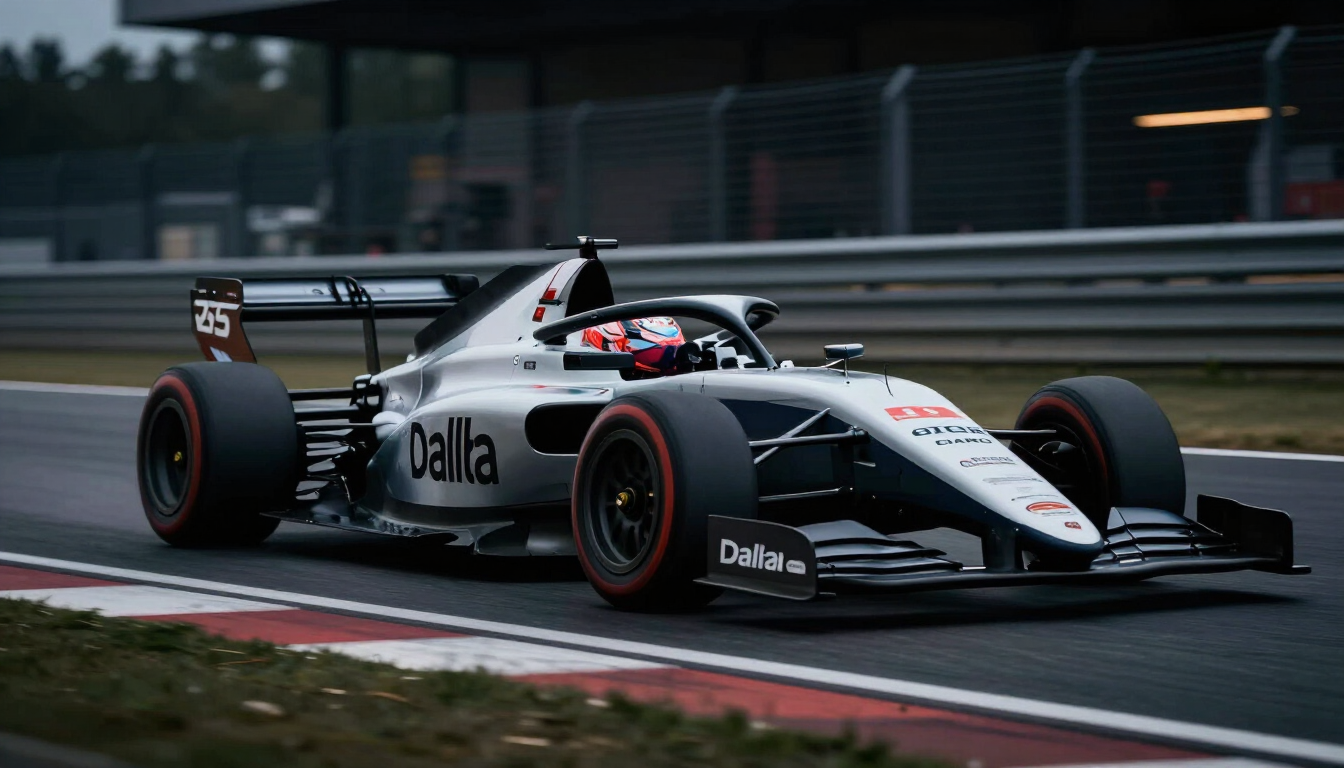
The F3 field produces more wheel to wheel action per race than almost any other category on the calendar. Photographing it requires anticipation, positioning, and a willingness to be wrong.
F3 photography is different from F1 photography in one fundamental way: the incidents happen. Not every session, but often enough that a track photographer who has studied the historical incident data and positioned themselves at the circuit's most likely contact points will, across a weekend, be in the right place for at least one significant moment.
The preparation involves watching data from previous races at the circuit, not for lap time, but for off track excursions, kerb contact incidents, and corner by corner incident frequency. The corners that produce the most F3 incidents are not always the most dramatic looking. They tend to be second category braking zones: fast enough to produce real consequences if the braking is misjudged, but not so fast that the car is beyond recovery with the right input. Turn 7 at this season's opening circuit produced nine incidents across the weekend. The grandstand opposite Turn 1 photographed none of them.
Contact photography in the junior formulae requires a specific shutter speed range. Fast enough to freeze the flying debris, tyre rubber, carbon pieces, suspension elements, but not so fast that the motion of the cars is eliminated. The range that works most consistently is between 1/640 and 1/1000 of a second, depending on ambient light. In the shade of a barrier section, this requires a high ISO that some photographers prefer to avoid. The images produced at ISO 4000 with a bit of grain are better than the images produced at ISO 400 with a motion blurred car.
The best F3 images from this season's European rounds share a characteristic: they were taken at corners that most photographers had left to cover a more photogenic but less active section of the circuit. Positioning against the crowd is, in junior formula photography as in junior formula racing, one of the most reliable sources of advantage.
The 2026 FIA Formula 3 Championship standings capture the state of play recorded After Round 7, Budapest. Freddie Slater leads the drivers classification on 130 points, 8 clear of Ugo Ugochukwu on 122, with Théophile Naël third on 75. A lead of 8 points is a meaningful cushion at this stage of the year, but with 2 rounds still to run it is not yet a decisive one. The championship will be settled by how the front runners negotiate the rounds that remain, not by the margin they carry into them.
Behind the leading group the field is tightly compressed. Ernesto Rivera holds fourth on 72, Brando Badoer is fifth on 71, and Noah Strømsted completes the top six on 59. The spread across those three positions is just 13 points, which means a single strong weekend can reshape the order behind the title contenders. The midfield battle is where the championship depth is most visible, and where the cost of one bad round is highest.
In the teams classification, Campos Racing leads on 269 points from Trident on 178 and ART Grand Prix on 148. The teams standings are often the more reliable indicator of outright pace, because they smooth out the individual bad weekends that every driver encounters across a full season. A team that places both its entries consistently in the points will accumulate constructors score at a rate that single car brilliance cannot match.
The depth of the teams championship reflects how competitive the Formula 3 grid has become. Campos Racing holds the lead on 269 points, but the gap to Trident on 178 is small enough that a single double points finish can close it. Behind them, ART Grand Prix sits third on 148, close enough to capitalise if either of the top two stumbles. The constructors race is a long game, and it rewards reliability over heroics.
The recent rounds have done most to shape the current standings. Silverstone at Silverstone, Great Britain was won by Ugochukwu / Gładysz, Spa Francorchamps at Spa Francorchamps, Belgium went the way of Ugochukwu / Rivera, and the most recent completed round, Budapest at Hungaroring, Hungary, was won by Taponen / Slater. Each of those results shifted the points arithmetic at the top and reset the momentum that the title contenders carry into the next weekend.