
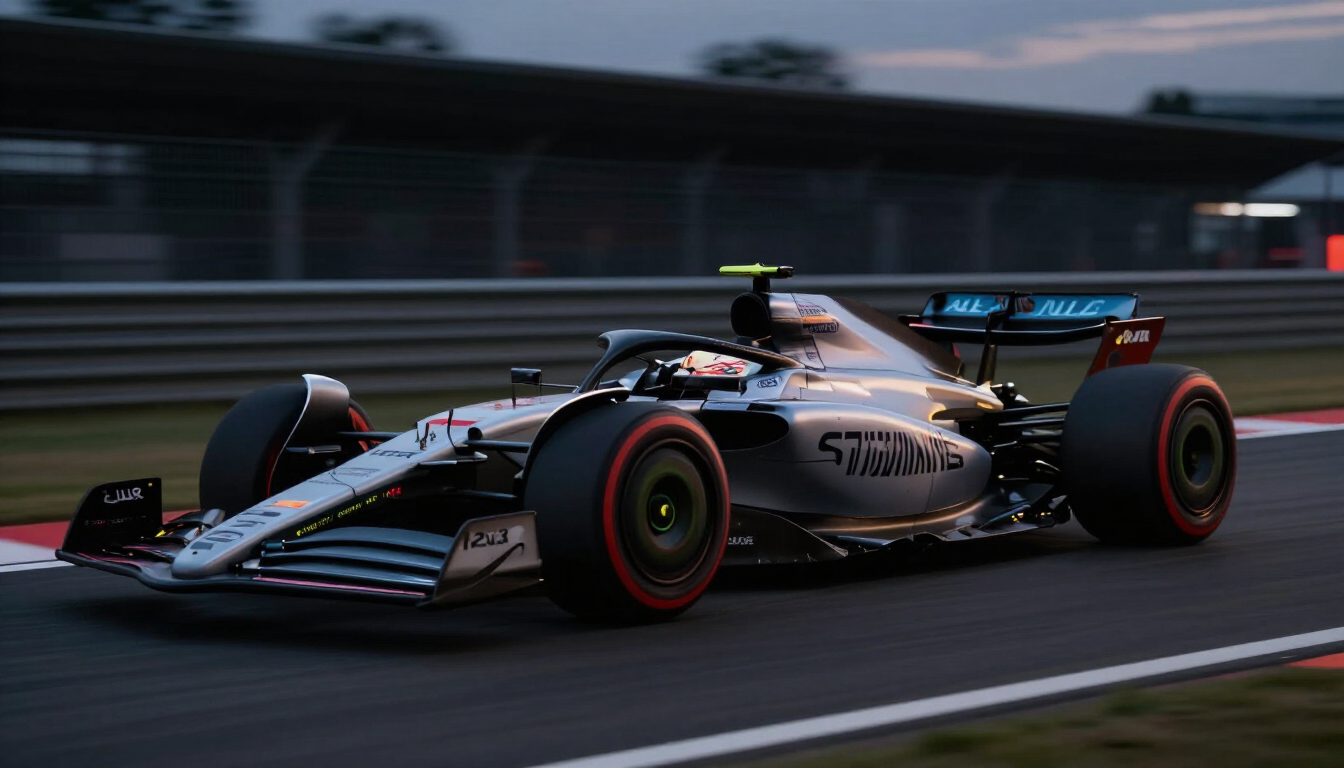
Three seasons into the ground effect regulations, teams are still finding the edge of aerodynamic instability. The data tells a different story to the public narrative.
The regulation change that was supposed to eliminate aerodynamic dependency on front wing downforce introduced, as a secondary effect, a form of bouncing at high speed that the engineering community called porpoising. The name was borrowed from an older phenomenon in earlier ground effect cars. The mechanism was different. The severity was, initially, surprising.
Porpoising in the current generation of cars occurs when the venturi tunnels under the floor stall at a specific ride height threshold. As the car runs closer to the ground, generating more downforce and therefore more aerodynamic load, the floor pressure increases until the flow path collapses. The sudden loss of downforce allows the car to rise, at which point the flow reattaches, the car descends again, and the cycle repeats at a frequency that depends on suspension stiffness and speed.
The data from the first season of the new regulations showed significant variance between teams in how severely they were affected. The variance was not primarily explained by floor geometry, which all teams had optimised according to similar principles, but by suspension compliance. Teams with stiffer suspension could not manage the cycle effectively. Teams with more compliance could damp the oscillation, but paid a performance penalty in low speed corners where roll stiffness matters.
Over the following two seasons, the regulation writers attempted to address the phenomenon through minimum floor height requirements and floor edge flexibility limits. The interventions reduced the severity but did not eliminate the fundamental instability. Teams learned to manage it through simulation: targeting ride height windows that avoided the stall threshold while maximising average downforce.
The honest engineering conclusion is that porpoising is a design constraint that has been managed rather than solved. The floor edges that generate the most peak downforce are also the most sensitive to the height at which the car runs. Finding the balance between peak load and stability window is now one of the defining technical challenges of the regulation era. The teams at the front of the grid have the most accurate model of where that balance sits. The teams behind are still learning.
The 2026 Formula 1 World Championship standings capture the state of play recorded After Round 11, Hungarian Grand Prix. Kimi Antonelli leads the drivers classification on 219 points, 50 clear of Lewis Hamilton on 169, with George Russell third on 160. A lead of 50 points is a meaningful cushion at this stage of the year, but with 12 rounds still to run it is not yet a decisive one. The championship will be settled by how the front runners negotiate the rounds that remain, not by the margin they carry into them.
Behind the leading group the field is tightly compressed. Charles Leclerc holds fourth on 138, Lando Norris is fifth on 128, and Max Verstappen completes the top six on 109. The spread across those three positions is just 29 points, which means a single strong weekend can reshape the order behind the title contenders. The midfield battle is where the championship depth is most visible, and where the cost of one bad round is highest.
In the teams classification, Mercedes leads on 468 points from Ferrari on 346 and McLaren on 287. The teams standings are often the more reliable indicator of outright pace, because they smooth out the individual bad weekends that every driver encounters across a full season. A team that places both its entries consistently in the points will accumulate constructors score at a rate that single car brilliance cannot match.
The depth of the teams championship reflects how competitive the Formula 1 grid has become. Mercedes holds the lead on 468 points, but the gap to Ferrari on 346 is still the clearest constructors story of the season. Behind them, McLaren sits third on 287, with Red Bull Racing fourth on 204. The constructors race is a long game, and it rewards reliability over heroics.
The recent rounds have done most to shape the current standings. British Grand Prix at Silverstone was won by Leclerc, Belgian Grand Prix at Spa Francorchamps went the way of Antonelli, and the most recent completed round, Hungarian Grand Prix at Budapest, was won by Norris. Each of those results shifted the points arithmetic at the top and reset the momentum that the title contenders carry into the next weekend.
The form guide across the recent rounds reads as a study in momentum. Norris took the most recent victory at Budapest, Antonelli won at Spa Francorchamps before that, and Leclerc prevailed at Silverstone. No single driver has dominated the recent sequence, which is why the points lead at the top has remained stable rather than stretching. The closing rounds will decide whether that pattern holds or one contender finally strings together the run of results that settles the title.
The next round is Dutch Grand Prix at Zandvoort, scheduled for 21, 23 Aug. It is round 12 of the season and the first of the closing stretch. How the championship leader handles the specific technical demands of Zandvoort will indicate whether the current margin is a foundation to build on or a high water mark that the chasing group can erode. Every remaining weekend now carries championship weight.
The 2026 Formula 1 World Championship calendar runs to 23 rounds. So far 11 rounds are complete, leaving 12 to decide the title. Across the completed rounds the championship has tested its contenders on a range of layouts, surfaces and conditions, and the standings reflect which driver has coped with that variety most consistently. The rounds still to come will ask different questions, and the answers will determine the champion.
The points structure means a maximum weekend is worth substantially more than the current lead at the top. With 50 points separating first from second and 12 rounds remaining, the leader can absorb an off weekend and still retain position, provided the closest rival does not take maximum score. That arithmetic shapes how the front runners approach risk in the closing rounds, where a conservative finish can be worth more than a speculative win.
The competitive spread at the front is narrow. The top three are covered by 59 points and the top six by 110. In a field this close, consistency is proving more valuable than outright speed, and the championship is trending towards the contender who minimises the bad weekends rather than the one who maximises the good ones. The margin between a title and a near miss is measured in finishes, not victories.
Across the completed rounds the pattern that separates the leader from the chasers is consistency rather than peak pace. Kimi Antonelli has accumulated 219 points through a sequence of measured finishes, while Lewis Hamilton on 169 has shown comparable speed on individual weekends but has not matched that reliability across the season. The championship rewards the driver who arrives at the final round with the fewest non scores, and that is where the current leader has built the advantage.
The closing stretch of the 2026 Formula 1 World Championship is where championship positions harden. 12 rounds remain, and each one carries enough points to move a driver up or down the order by several places. The pressure shifts from building a lead to defending one, and the approach that won points in the middle of the season is not always the approach that secures a title in the final rounds. How the contenders adapt to that pressure is the story the remaining calendar will tell.