
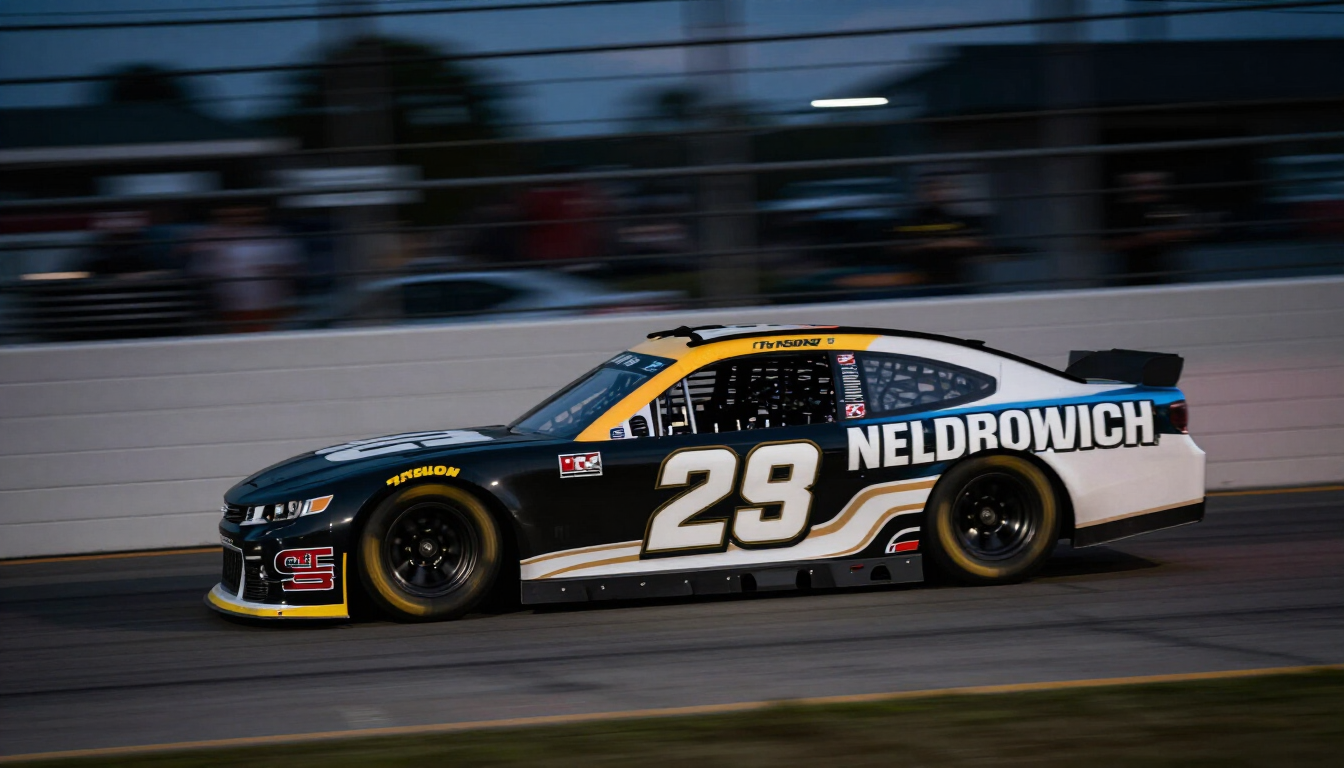
Regular season points decide playoff seeding and little else, but the way this lead was built says a great deal about how the postseason will go.
The NASCAR Cup regular season is a long audition for a ten race elimination playoff. Points leaders get playoff bonus points and seeding, but the championship is decided in a single winner takes all race at the end. That structure rewards a very specific profile: teams that win multiple races and, more importantly, teams that can win on every kind of track.
Larson qualifies on both counts. The Daytona 500 win was a superspeedway result, decided by drafting position and a final lap move made from third rather than second. The subsequent wins came on a short track and a mile and a half, which is the combination that matters most, because the playoff rounds are built around exactly those disciplines.
The other advantage is stage points. NASCAR awards points at two intervals during each race, which turns the middle third of a race into its own competition. Teams that consistently run inside the top five at the stage breaks accumulate playoff bonus points that carry through the elimination rounds, and this is where the current leader has separated from drivers with similar win totals.
Where the season could unravel is the same place it always does: superspeedway attrition in the round of twelve, where a multi car accident that is nobody's fault ends a championship campaign. No amount of speed or preparation insures against it, and every contender knows the round is effectively a coin toss.
The regular season finale therefore matters less for the trophy than for the playoff field forming behind it. Several spots remain open on wins, and the closing races have a habit of producing a first time winner who upends the entire bracket.
For the leader, the brief from here is simple and slightly unsatisfying: bank the seeding, take the bonus points, and accept that ten races in the autumn will decide everything the previous seven months earned.
The 2026 NASCAR Cup Series standings capture the state of play recorded After Round 23, Michigan Speedway. Kyle Larson leads the drivers classification on 877 points, 13 clear of Chase Elliott on 864, with Denny Hamlin third on 851. A lead of 13 points is a meaningful cushion at this stage of the year, but with 3 rounds still to run it is not yet a decisive one. The championship will be settled by how the front runners negotiate the rounds that remain, not by the margin they carry into them.
Behind the leading group the field is tightly compressed. William Byron holds fourth on 838, Martin Truex Jr is fifth on 822, and Austin Cindric completes the top six on 809. The spread across those three positions is just 29 points, which means a single strong weekend can reshape the order behind the title contenders. The midfield battle is where the championship depth is most visible, and where the cost of one bad round is highest.
In the teams classification, Hendrick Motorsports leads on 2579 points from Joe Gibbs Racing on 2427 and Team Penske on 1596. The teams standings are often the more reliable indicator of outright pace, because they smooth out the individual bad weekends that every driver encounters across a full season. A team that places both its entries consistently in the points will accumulate constructors score at a rate that single car brilliance cannot match.
The depth of the teams championship reflects how competitive the NASCAR Cup Series grid has become. Hendrick Motorsports holds the lead on 2579 points, but the gap to Joe Gibbs Racing on 2427 is small enough that a single double points finish can close it. Behind them, Team Penske sits third on 1596, close enough to capitalise if either of the top two stumbles. The constructors race is a long game, and it rewards reliability over heroics.
The recent rounds have done most to shape the current standings. Coca Cola 600 at Charlotte Motor Speedway was won by Larson, Brickyard 400 at Indianapolis Motor Speedway went the way of Elliott, and the most recent completed round, FireKeepers Casino 400 at Michigan Speedway, was won by Hamlin. Each of those results shifted the points arithmetic at the top and reset the momentum that the title contenders carry into the next weekend.
The form guide across the recent rounds reads as a study in momentum. Hamlin took the most recent victory at Michigan Speedway, Elliott won at Indianapolis Motor Speedway before that, and Larson prevailed at Charlotte Motor Speedway. No single driver has dominated the recent sequence, which is why the points lead at the top has remained stable rather than stretching. The closing rounds will decide whether that pattern holds or one contender finally strings together the run of results that settles the title.