
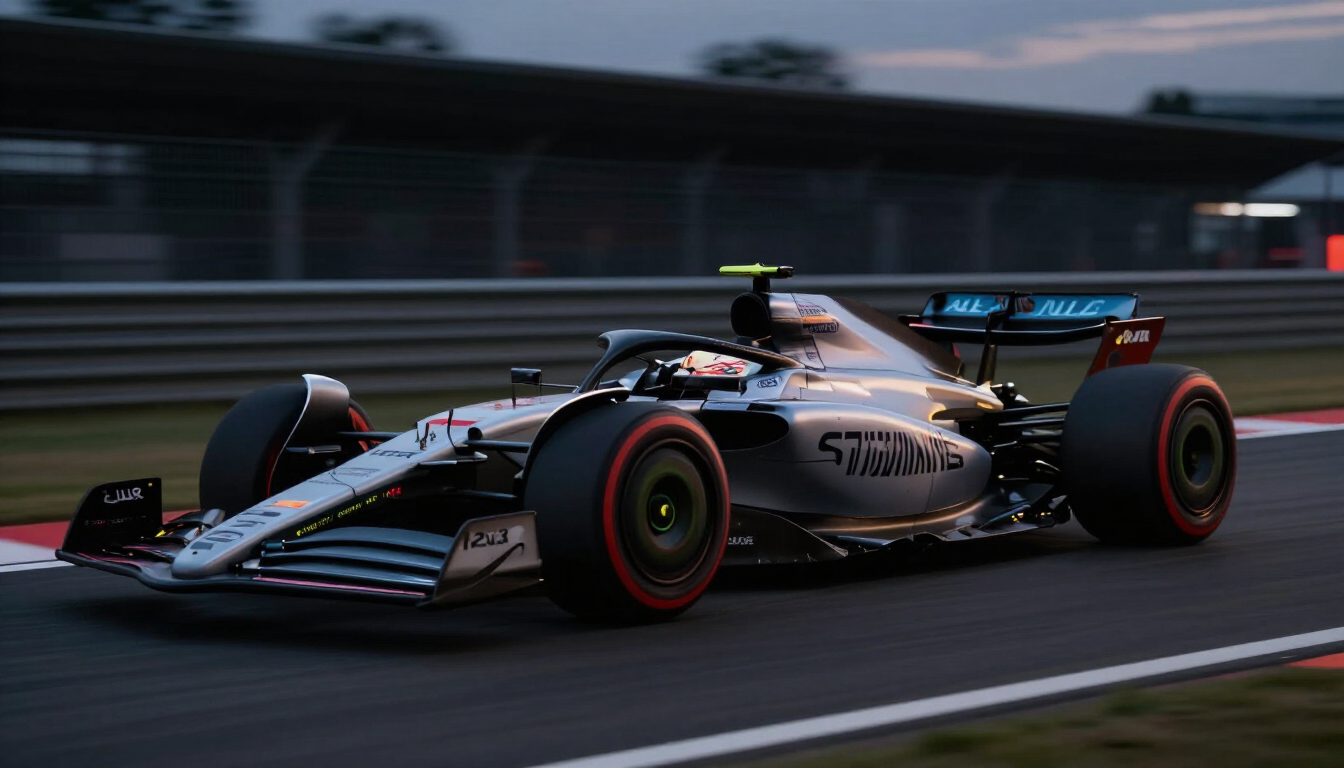
A tyre call made 34 laps early turned a routine Sunday into the most tactical Grand Prix of the season.
The pit wall call came during lap 23. Hard tyres, a clear track, and a gap that would only close, not open, as the field compacted behind the virtual safety car. It was the kind of decision that looks obvious in hindsight and takes twelve seconds of silence to make in real time.
The strategy director had been tracking the tyre delta since practice. Long run pace on the medium compound had been degrading faster than the teams had modelled. A one stop on hards from that early window required the driver to manage the rear left across the final stint, 34 laps on a surface that was giving up grip with every degree of ambient temperature drop.
Radio traffic from the leading pack told its own story. Two teams called their drivers in on lap 31, confident in the standard two stop approach. The team that held out was banking on a compounding undercut offset, that by the time the chasers completed their second stop, the track position advantage would outweigh any pace deficit. It very nearly did not.
With seven laps remaining the gap was under three seconds. The lead driver began reporting rear instability on the back straight. The team replied with a delta: extend the gap, manage the tyres, do not defend. It was not the instruction the driver wanted. It was the one that worked.
Post race analysis confirmed the call was correct by 1.4 seconds of margin. The tyre survived. The strategy held. On a weekend when most stories write themselves, this one required the pit wall to earn its result, and the driver to trust them completely.
The 2026 Formula 1 World Championship standings capture the state of play recorded After Round 11, Hungarian Grand Prix. Kimi Antonelli leads the drivers classification on 219 points, 50 clear of Lewis Hamilton on 169, with George Russell third on 160. A lead of 50 points is a meaningful cushion at this stage of the year, but with 12 rounds still to run it is not yet a decisive one. The championship will be settled by how the front runners negotiate the rounds that remain, not by the margin they carry into them.
Behind the leading group the field is tightly compressed. Charles Leclerc holds fourth on 138, Lando Norris is fifth on 128, and Max Verstappen completes the top six on 109. The spread across those three positions is just 29 points, which means a single strong weekend can reshape the order behind the title contenders. The midfield battle is where the championship depth is most visible, and where the cost of one bad round is highest.
In the teams classification, Mercedes leads on 468 points from Ferrari on 346 and McLaren on 287. The teams standings are often the more reliable indicator of outright pace, because they smooth out the individual bad weekends that every driver encounters across a full season. A team that places both its entries consistently in the points will accumulate constructors score at a rate that single car brilliance cannot match.
The depth of the teams championship reflects how competitive the Formula 1 grid has become. Mercedes holds the lead on 468 points, but the gap to Ferrari on 346 is still the clearest constructors story of the season. Behind them, McLaren sits third on 287, with Red Bull Racing fourth on 204. The constructors race is a long game, and it rewards reliability over heroics.
The recent rounds have done most to shape the current standings. British Grand Prix at Silverstone was won by Leclerc, Belgian Grand Prix at Spa Francorchamps went the way of Antonelli, and the most recent completed round, Hungarian Grand Prix at Budapest, was won by Norris. Each of those results shifted the points arithmetic at the top and reset the momentum that the title contenders carry into the next weekend.
The form guide across the recent rounds reads as a study in momentum. Norris took the most recent victory at Budapest, Antonelli won at Spa Francorchamps before that, and Leclerc prevailed at Silverstone. No single driver has dominated the recent sequence, which is why the points lead at the top has remained stable rather than stretching. The closing rounds will decide whether that pattern holds or one contender finally strings together the run of results that settles the title.
The next round is Dutch Grand Prix at Zandvoort, scheduled for 21, 23 Aug. It is round 12 of the season and the first of the closing stretch. How the championship leader handles the specific technical demands of Zandvoort will indicate whether the current margin is a foundation to build on or a high water mark that the chasing group can erode. Every remaining weekend now carries championship weight.
The 2026 Formula 1 World Championship calendar runs to 23 rounds. So far 11 rounds are complete, leaving 12 to decide the title. Across the completed rounds the championship has tested its contenders on a range of layouts, surfaces and conditions, and the standings reflect which driver has coped with that variety most consistently. The rounds still to come will ask different questions, and the answers will determine the champion.
The points structure means a maximum weekend is worth substantially more than the current lead at the top. With 50 points separating first from second and 12 rounds remaining, the leader can absorb an off weekend and still retain position, provided the closest rival does not take maximum score. That arithmetic shapes how the front runners approach risk in the closing rounds, where a conservative finish can be worth more than a speculative win.
The competitive spread at the front is narrow. The top three are covered by 59 points and the top six by 110. In a field this close, consistency is proving more valuable than outright speed, and the championship is trending towards the contender who minimises the bad weekends rather than the one who maximises the good ones. The margin between a title and a near miss is measured in finishes, not victories.
Across the completed rounds the pattern that separates the leader from the chasers is consistency rather than peak pace. Kimi Antonelli has accumulated 219 points through a sequence of measured finishes, while Lewis Hamilton on 169 has shown comparable speed on individual weekends but has not matched that reliability across the season. The championship rewards the driver who arrives at the final round with the fewest non scores, and that is where the current leader has built the advantage.
The closing stretch of the 2026 Formula 1 World Championship is where championship positions harden. 12 rounds remain, and each one carries enough points to move a driver up or down the order by several places. The pressure shifts from building a lead to defending one, and the approach that won points in the middle of the season is not always the approach that secures a title in the final rounds. How the contenders adapt to that pressure is the story the remaining calendar will tell.
The circuits still to come demand different strengths from the field. Dutch Grand Prix at Zandvoort will test one set of requirements, and the rounds that follow will each favour a slightly different balance of setup and driving style. A championship leader whose advantage is built on versatility across circuit types is better placed than one whose points have come from a narrow band of favourable venues. The remaining calendar will expose which of the contenders has that range.
Championship pressure changes how a driver races. Kimi Antonelli carries a 50 point lead into the closing rounds, a margin that allows for measured decisions but not for complacency. Lewis Hamilton on 169 must now take the risks the leader can decline, and that asymmetry tends to widen the gap when the chaser pushes too hard and narrows it when the leader plays too safe. Managing that tension is the final skill the season will test.