
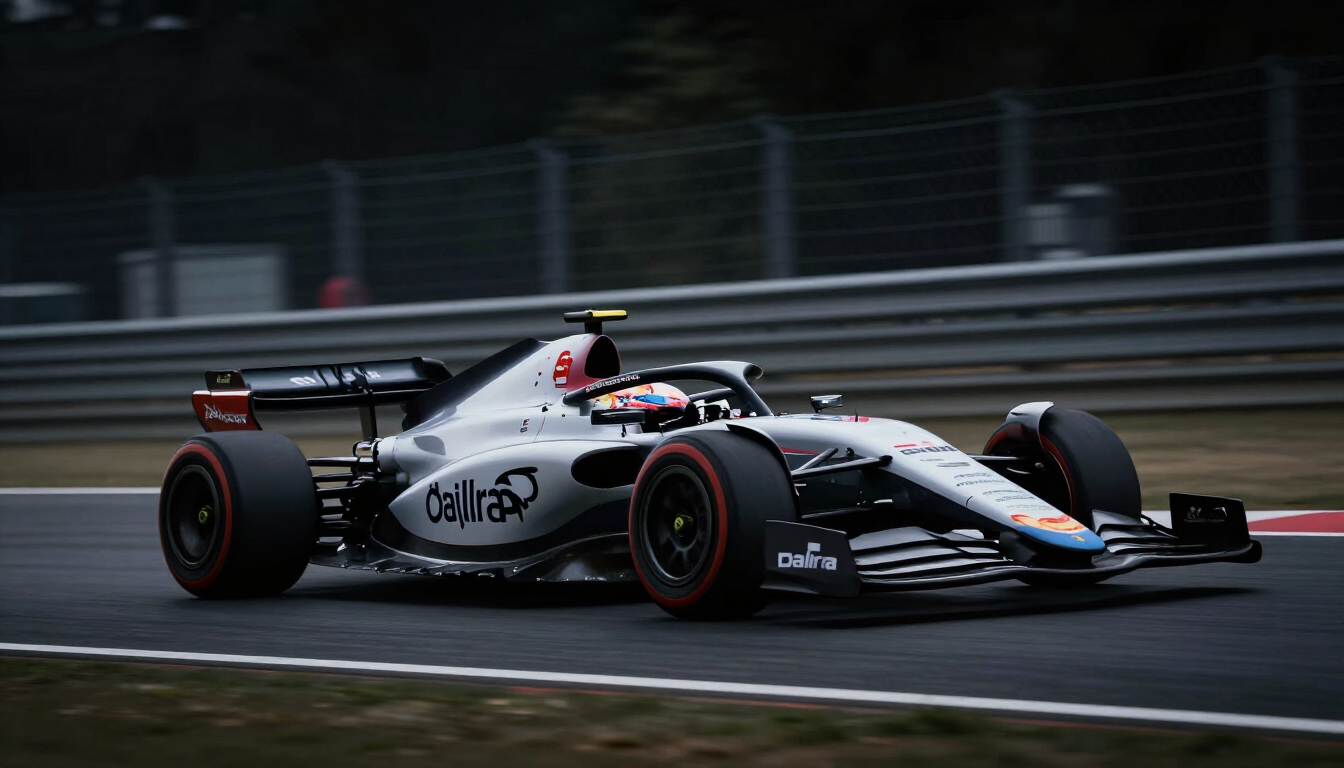
The F2 sprint race reverse grid format produces more overtaking than any other session. It also produces outcomes that have nothing to do with pace. The debate is more interesting than either side admits.
The format is simple: the top eight qualifiers are reversed for the sprint race grid, so the polesitter starts ninth, and the driver who qualified ninth starts first. The intent is to produce overtaking. It produces overtaking. The argument about whether it should exist is therefore not an argument about its effectiveness, it is an argument about what the series is trying to reward.
The case against the reverse grid is clean: junior formulae should develop racing skills, not lottery skills. A driver who qualifies on pole should benefit from having the fastest car over a single lap. If that benefit is removed, the incentive to develop single lap pace is reduced, and the championship standings become less reliable as a ranking of the grid's fastest drivers. These are reasonable arguments. They are also arguments that racing series have been having, and losing, since reverse grid formats were introduced.
The case for is equally clean: the sprint race is the most watched and most discussed session of most F2 weekends. It generates overtaking at circuits where the feature race might produce two. It forces drivers to practice race craft, defending, overtaking in traffic, managing temperature in a pack, that a feature race from near the front of the grid does not develop. It is, empirically, exciting.
The compromise position, which several team principals have proposed and none of the series managers have accepted, is a qualifying linked reverse grid that stops at position four or five rather than position eight. This would maintain the competitive signal at the front while still providing the entertainment structure in the midfield. Whether entertainment structure belongs in a development series is a separate question that the sport has implicitly answered by keeping the format.
The best hour of the weekend, or an unfair lottery. The data says it is both. What it is not is a problem that needs solving urgently, the racing it produces is too good, and the discussion it generates is part of the product.
The 2026 FIA Formula 2 Championship standings capture the state of play recorded After Round 9, Budapest. Nikola Tsolov leads the drivers classification on 167 points, 20 clear of Gabriele Minì on 147, with Rafael Câmara third on 145. A lead of 20 points is a meaningful cushion at this stage of the year, but with 5 rounds still to run it is not yet a decisive one. The championship will be settled by how the front runners negotiate the rounds that remain, not by the margin they carry into them.
Behind the leading group the field is tightly compressed. Alexander Dunne holds fourth on 108, Noel León is fifth on 94, and Kush Maini completes the top six on 88. The spread across those three positions is just 20 points, which means a single strong weekend can reshape the order behind the title contenders. The midfield battle is where the championship depth is most visible, and where the cost of one bad round is highest.
In the teams classification, Campos Racing leads on 261 points from Invicta Racing on 187 and MP Motorsport on 176. The teams standings are often the more reliable indicator of outright pace, because they smooth out the individual bad weekends that every driver encounters across a full season. A team that places both its entries consistently in the points will accumulate constructors score at a rate that single car brilliance cannot match.
The depth of the teams championship reflects how competitive the Formula 2 grid has become. Campos Racing holds the lead on 261 points, but the gap to Invicta Racing on 187 is small enough that a single double points finish can close it. Behind them, MP Motorsport sits third on 176, close enough to capitalise if either of the top two stumbles. The constructors race is a long game, and it rewards reliability over heroics.
The recent rounds have done most to shape the current standings. Silverstone at Silverstone, Great Britain was won by Bennett / Tsolov, Spa Francorchamps at Spa Francorchamps, Belgium went the way of Tsolov / León, and the most recent completed round, Budapest at Hungaroring, Hungary, was won by Maini / Câmara. Each of those results shifted the points arithmetic at the top and reset the momentum that the title contenders carry into the next weekend.
The form guide across the recent rounds reads as a study in momentum. Maini / Câmara took the most recent victory at Hungaroring, Hungary, Tsolov / León won at Spa Francorchamps, Belgium before that, and Bennett / Tsolov prevailed at Silverstone, Great Britain. No single driver has dominated the recent sequence, which is why the points lead at the top has remained stable rather than stretching. The closing rounds will decide whether that pattern holds or one contender finally strings together the run of results that settles the title.