
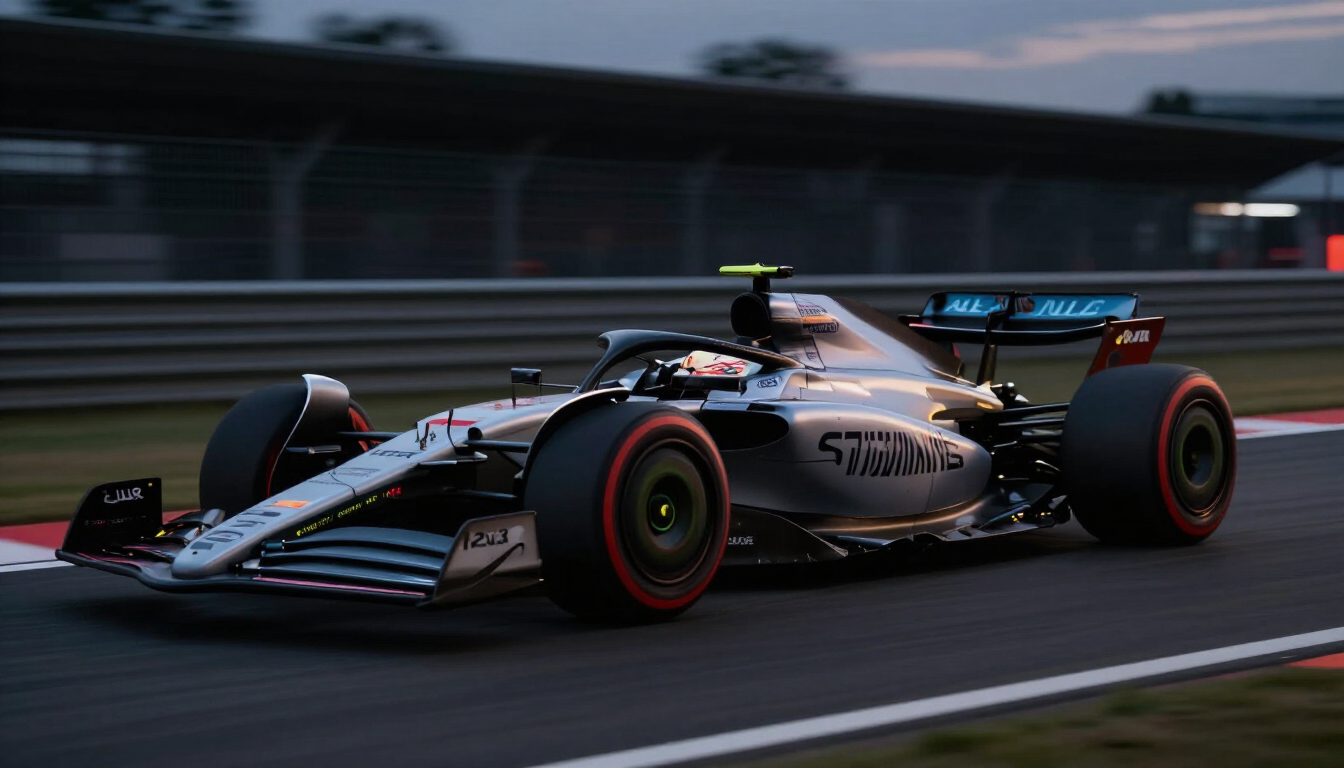
Formula 1 CEO Stefano Domenicali has confirmed that the Sprint format will be extended to more venues from 2027, while signalling that the concept will not be rolled out to every race weekend in order to preserve its commercial value.
Stefano Domenicali has given the clearest indication yet that Formula 1 will expand its Sprint race programme from 2027, describing the increase as "1,000 per cent" certain on a Liberty Media earnings call. The confirmation comes as F1's Sprint format marks its five year anniversary, having grown from an experimental concept to a fixture at six race weekends per season since it was introduced.
Speaking on the call, Domenicali pointed to the format's consistent ability to drive higher Friday attendances and stronger daily gate figures across Sprint weekends. "Our Sprint format continues to drive higher Friday attendances and stronger daily attendances to our race weekend," he said. "The success of the Sprint format continues to drive interest from promoters in hosting a Sprint race, and we expect to expand the number of Sprints for next year and to provide further details soon."
The current Sprint format alters the structure of a race weekend significantly. A single free practice session takes place on Friday morning, followed by Sprint qualifying in the afternoon. Saturday opens with the 100 kilometre Sprint race itself, before teams are permitted to adjust their cars ahead of Grand Prix qualifying later the same day. The full Grand Prix then takes place on Sunday as usual. The compressed schedule is widely acknowledged as more intense for teams and drivers, with competitive action beginning after just one hour of track time.
Domenicali was careful to signal that the expansion would not extend to every race weekend. The scarcity of Sprint rounds is itself a commercial asset: race promoters pay a premium to host one, and that premium depends on Sprint weekends remaining a distinct and coveted format rather than a universal feature of the calendar. "We want to do it in the right way because, of course, this will allow us also to make sure that the scarcity is a value," he explained. "If commercially we would go everywhere, of course, that's not anymore a value that we can really produce from the commercial point of view."
Reports suggest the 2027 calendar could feature between nine and ten Sprint races, compared to the six currently held each season. If confirmed, nearly half of next season's race weekends would carry the Sprint format, representing a significant shift in the championship's rhythm. Drivers and teams have expressed mixed views on the expansion: those who enjoy the intensity of Sprint weekends welcome the increase, while others have raised concerns about the physical and logistical demands of more frequent compressed schedules.
The broader context for the expansion is the financial pressure revealed by Liberty Media's recent results. Sprint weekends generate higher attendances and stronger broadcast numbers, and with the first half of 2026 significantly impacted by the Middle East calendar disruptions, the commercial case for maximising the return from the races that do take place has rarely been stronger. Domenicali's confirmation that further details will follow soon suggests a formal announcement of the 2027 Sprint calendar is imminent.
The 2026 Formula 1 World Championship standings capture the state of play recorded After Round 11, Hungarian Grand Prix. Kimi Antonelli leads the drivers classification on 219 points, 50 clear of Lewis Hamilton on 169, with George Russell third on 160. A lead of 50 points is a meaningful cushion at this stage of the year, but with 12 rounds still to run it is not yet a decisive one. The championship will be settled by how the front runners negotiate the rounds that remain, not by the margin they carry into them.
Behind the leading group the field is tightly compressed. Charles Leclerc holds fourth on 138, Lando Norris is fifth on 128, and Max Verstappen completes the top six on 109. The spread across those three positions is just 29 points, which means a single strong weekend can reshape the order behind the title contenders. The midfield battle is where the championship depth is most visible, and where the cost of one bad round is highest.
In the teams classification, Mercedes leads on 468 points from Ferrari on 346 and McLaren on 287. The teams standings are often the more reliable indicator of outright pace, because they smooth out the individual bad weekends that every driver encounters across a full season. A team that places both its entries consistently in the points will accumulate constructors score at a rate that single car brilliance cannot match.
The depth of the teams championship reflects how competitive the Formula 1 grid has become. Mercedes holds the lead on 468 points, but the gap to Ferrari on 346 is still the clearest constructors story of the season. Behind them, McLaren sits third on 287, with Red Bull Racing fourth on 204. The constructors race is a long game, and it rewards reliability over heroics.
The recent rounds have done most to shape the current standings. British Grand Prix at Silverstone was won by Leclerc, Belgian Grand Prix at Spa Francorchamps went the way of Antonelli, and the most recent completed round, Hungarian Grand Prix at Budapest, was won by Norris. Each of those results shifted the points arithmetic at the top and reset the momentum that the title contenders carry into the next weekend.
The form guide across the recent rounds reads as a study in momentum. Norris took the most recent victory at Budapest, Antonelli won at Spa Francorchamps before that, and Leclerc prevailed at Silverstone. No single driver has dominated the recent sequence, which is why the points lead at the top has remained stable rather than stretching. The closing rounds will decide whether that pattern holds or one contender finally strings together the run of results that settles the title.
The next round is Dutch Grand Prix at Zandvoort, scheduled for 21, 23 Aug. It is round 12 of the season and the first of the closing stretch. How the championship leader handles the specific technical demands of Zandvoort will indicate whether the current margin is a foundation to build on or a high water mark that the chasing group can erode. Every remaining weekend now carries championship weight.