
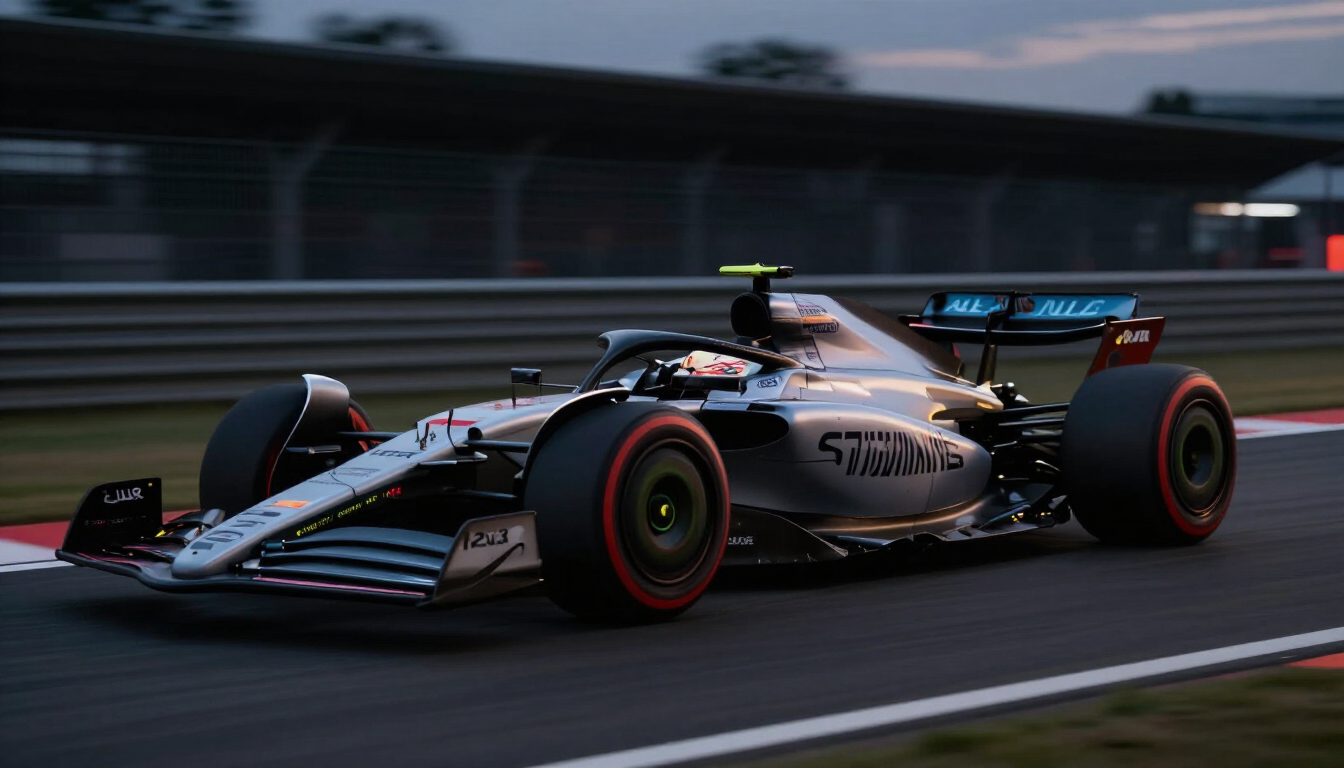
When the field converged on a one stop strategy, one team looked at the same data and saw something different.
The pre race strategy predictions had settled on a one stop approach for the top five. Tyre degradation from practice had been moderate, the safety car probability was assessed at around thirty percent, and the circuit, a low abrasion surface with long medium speed corners, suited a compound that would go the distance.
One team disagreed. Their practice long run data showed a degradation cliff at lap 28 on the medium compound that their simulations had not picked up in the previous two races. It was subtle, less than two tenths per lap, but at a circuit where the entire field was within a second on race pace, two tenths every lap for the final quarter of the race was the difference between first and fifth.
They went to a two stop. It put them out of sequence with the field for the entire first stint and gave up track position twice. When the strategy resolved in the final twenty laps, they were running in clean air, on fresh rubber, and able to lap three seconds a lap quicker than the leaders. They won by eleven seconds after running last in the top ten at the race halfway point.
The strategic debrief took four hours. The chief strategist flagged the degradation cliff data as a modelling improvement. The team principal described it in the post race press conference as a "calculated risk." In the paddock, the engineers from three other teams were already going back through their own practice data, asking why they had not seen the same thing.
Strategy is not about being bolder than your competitors. It is about processing the same data more precisely and being willing to act on what the numbers say, even when every team around you has read them differently. That is what happened here.
The 2026 Formula 1 World Championship standings capture the state of play recorded After Round 11, Hungarian Grand Prix. Kimi Antonelli leads the drivers classification on 219 points, 50 clear of Lewis Hamilton on 169, with George Russell third on 160. A lead of 50 points is a meaningful cushion at this stage of the year, but with 12 rounds still to run it is not yet a decisive one. The championship will be settled by how the front runners negotiate the rounds that remain, not by the margin they carry into them.
Behind the leading group the field is tightly compressed. Charles Leclerc holds fourth on 138, Lando Norris is fifth on 128, and Max Verstappen completes the top six on 109. The spread across those three positions is just 29 points, which means a single strong weekend can reshape the order behind the title contenders. The midfield battle is where the championship depth is most visible, and where the cost of one bad round is highest.
In the teams classification, Mercedes leads on 468 points from Ferrari on 346 and McLaren on 287. The teams standings are often the more reliable indicator of outright pace, because they smooth out the individual bad weekends that every driver encounters across a full season. A team that places both its entries consistently in the points will accumulate constructors score at a rate that single car brilliance cannot match.
The depth of the teams championship reflects how competitive the Formula 1 grid has become. Mercedes holds the lead on 468 points, but the gap to Ferrari on 346 is still the clearest constructors story of the season. Behind them, McLaren sits third on 287, with Red Bull Racing fourth on 204. The constructors race is a long game, and it rewards reliability over heroics.
The recent rounds have done most to shape the current standings. British Grand Prix at Silverstone was won by Leclerc, Belgian Grand Prix at Spa Francorchamps went the way of Antonelli, and the most recent completed round, Hungarian Grand Prix at Budapest, was won by Norris. Each of those results shifted the points arithmetic at the top and reset the momentum that the title contenders carry into the next weekend.
The form guide across the recent rounds reads as a study in momentum. Norris took the most recent victory at Budapest, Antonelli won at Spa Francorchamps before that, and Leclerc prevailed at Silverstone. No single driver has dominated the recent sequence, which is why the points lead at the top has remained stable rather than stretching. The closing rounds will decide whether that pattern holds or one contender finally strings together the run of results that settles the title.
The next round is Dutch Grand Prix at Zandvoort, scheduled for 21, 23 Aug. It is round 12 of the season and the first of the closing stretch. How the championship leader handles the specific technical demands of Zandvoort will indicate whether the current margin is a foundation to build on or a high water mark that the chasing group can erode. Every remaining weekend now carries championship weight.
The 2026 Formula 1 World Championship calendar runs to 23 rounds. So far 11 rounds are complete, leaving 12 to decide the title. Across the completed rounds the championship has tested its contenders on a range of layouts, surfaces and conditions, and the standings reflect which driver has coped with that variety most consistently. The rounds still to come will ask different questions, and the answers will determine the champion.
The points structure means a maximum weekend is worth substantially more than the current lead at the top. With 50 points separating first from second and 12 rounds remaining, the leader can absorb an off weekend and still retain position, provided the closest rival does not take maximum score. That arithmetic shapes how the front runners approach risk in the closing rounds, where a conservative finish can be worth more than a speculative win.