
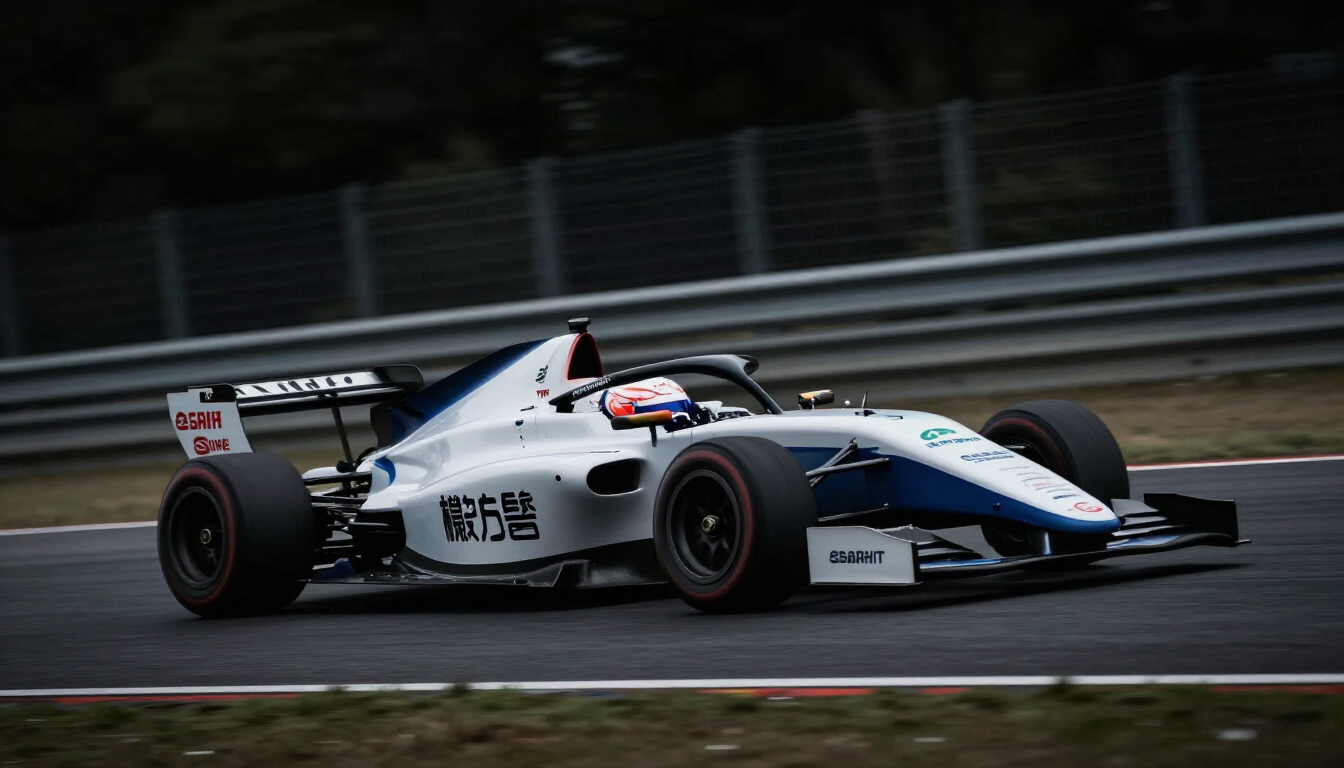
The fastest single seater category outside Formula 1 has produced its tightest season in years, and one driver has found half a tenth nobody else can match in qualifying.
Super Formula runs a single chassis, two engine suppliers and a spec tyre, which leaves qualifying as an almost pure measure of driver and set up. The races are short, the pit windows are narrow, and overtaking at circuits like Sugo requires either a significant tyre delta or a mistake. In that environment, Saturday decides most of Sunday.
Hirakawa has been the best qualifier of the season by a clear margin, and the wins at Fuji and Sugo followed the same pattern: front row, clean launch, and a first stint pace that forced the cars behind into a strategic reaction rather than a straight fight.
Fuji rewarded aggression on the out lap after the stop, where the tyre gives its peak grip for barely two laps before settling. Sugo demanded the opposite, the circuit punishes any front tyre abuse in the opening sequence, and the race was won by managing entry speed into the blind uphill right hander rather than by attacking it.
The championship remains close because Super Formula points are shallow and the field is deep. Sekiguchi has the pace to win any remaining round, and the Suzuka finale traditionally rewards drivers with strong high speed balance. Two poor results would erase the current advantage entirely.
What the season has demonstrated is why Super Formula continues to function as the most demanding proving ground in Asian motorsport: with the equipment equalised, the margins have collapsed to a tenth, and the driver in front has earned every point of the gap.
The 2026 Japanese Super Formula Championship standings capture the state of play recorded After Round 5, Sugo. Ryo Hirakawa leads the drivers classification on 44 points, 6 clear of Tomoki Nojiri on 38, with Yuhi Sekiguchi third on 35. A lead of 6 points is a meaningful cushion at this stage of the year, but with 2 rounds still to run it is not yet a decisive one. The championship will be settled by how the front runners negotiate the rounds that remain, not by the margin they carry into them.
Behind the leading group the field is tightly compressed. Naoki Yamamoto holds fourth on 31, Ren Sato is fifth on 28, and Sho Tsuboi completes the top six on 24. The spread across those three positions is just 7 points, which means a single strong weekend can reshape the order behind the title contenders. The midfield battle is where the championship depth is most visible, and where the cost of one bad round is highest.
In the teams classification, Toyota Gazoo Racing (TOM'S) leads on 44 points from Honda (Mugen) on 38 and Toyota (Impul) on 35. The teams standings are often the more reliable indicator of outright pace, because they smooth out the individual bad weekends that every driver encounters across a full season. A team that places both its entries consistently in the points will accumulate constructors score at a rate that single car brilliance cannot match.
The depth of the teams championship reflects how competitive the Super Formula grid has become. Toyota Gazoo Racing (TOM'S) holds the lead on 44 points, but the gap to Honda (Mugen) on 38 is small enough that a single double points finish can close it. Behind them, Toyota (Impul) sits third on 35, close enough to capitalise if either of the top two stumbles. The constructors race is a long game, and it rewards reliability over heroics.
The recent rounds have done most to shape the current standings. Suzuka Circuit at Suzuka, Mie was won by Sekiguchi, Hokkaido (Tokachi) at Tokachi International Speedway went the way of Yamamoto, and the most recent completed round, Sugo at Sportsland Sugo, Miyagi, was won by Hirakawa. Each of those results shifted the points arithmetic at the top and reset the momentum that the title contenders carry into the next weekend.