
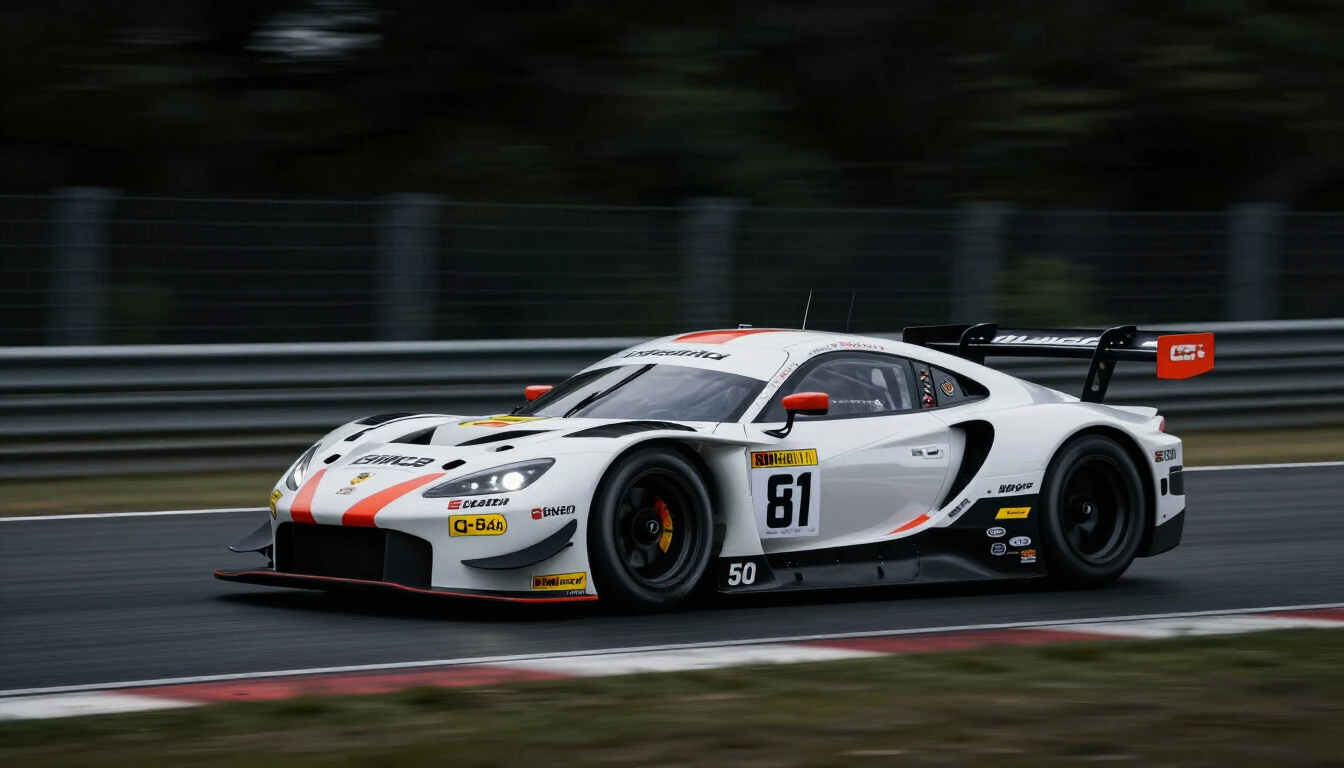
Japan's premier sportscar championship has the most aggressive success ballast system in world motorsport, which makes an early points lead a mixed blessing.
Super GT is designed to stop anyone running away with the championship. Success ballast scales with points scored, and at the upper end of the scale it is applied as a fuel flow restriction rather than weight, which blunts straight line performance in a way no set up change can recover. Winning early in Super GT means racing the rest of the season with a handicap.
ARTA have won early anyway. The Okayama and Suzuka victories came from opposite ends of the strategic spectrum: Okayama was a track position race decided in the first ten laps, Suzuka a tyre management exercise where the winning car ran a harder compound and made it work through the closing stint.
What makes the GT500 class unusual is that the ballast forces genuine in season development of driving style, not just car set up. Racing with a reduced fuel flow changes braking points, exit traction and, critically, how much of the tyre can be used before the deficit becomes permanent. Managing that is a distinct skill, and it is where Japanese domestic racing produces some of the most complete professional drivers in the world.
The chasing Toyota crews, TOM'S in particular, have the advantage of lighter ballast and a car that has historically been strongest at Fuji, which hosts one of the heaviest points rounds remaining. Nissan's form has been more variable but their long run pace at Motegi is a genuine threat.
The final round runs to reduced ballast, which traditionally hands the title to whoever arrives with a points lead and a car freed from its handicap. The leaders know it. Every race between now and then is about losing as little as possible while carrying the heaviest penalty in the field.
The 2026 Super GT Championship standings capture the state of play recorded After Round 4, Sugo. Tomoki Nojiri / Ryo Hirakawa leads the drivers classification on 64 points, 6 clear of Yuhi Sekiguchi / Giuliano Alesi on 58, with Ronnie Quintarelli / M. Takaboshi third on 52. A lead of 6 points is a meaningful cushion at this stage of the year, but with 3 rounds still to run it is not yet a decisive one. The championship will be settled by how the front runners negotiate the rounds that remain, not by the margin they carry into them.
Behind the leading group the field is tightly compressed. Naoki Yamamoto / Sho Tsuboi holds fourth on 47, Kenta Yamashita / Jenson Button is fifth on 41, and Daisuke Nakajima / Tadasuke Makino completes the top six on 38. The spread across those three positions is just 9 points, which means a single strong weekend can reshape the order behind the title contenders. The midfield battle is where the championship depth is most visible, and where the cost of one bad round is highest.
In the teams classification, ARTA Honda leads on 64 points from TOM'S GR Supra (combined) on 105 and NISMO Nissan on 52. The teams standings are often the more reliable indicator of outright pace, because they smooth out the individual bad weekends that every driver encounters across a full season. A team that places both its entries consistently in the points will accumulate constructors score at a rate that single car brilliance cannot match.
The depth of the teams championship reflects how competitive the Super GT grid has become. ARTA Honda holds the lead on 64 points, but the gap to TOM'S GR Supra (combined) on 105 is small enough that a single double points finish can close it. Behind them, NISMO Nissan sits third on 52, close enough to capitalise if either of the top two stumbles. The constructors race is a long game, and it rewards reliability over heroics.
The recent rounds have done most to shape the current standings. Fuji 500km at Fuji Speedway, Shizuoka was won by Sekiguchi/Alesi, Suzuka 300km at Suzuka Circuit, Mie went the way of Quintarelli/Takaboshi, and the most recent completed round, Sugo at Sportsland Sugo, Miyagi, was won by Yamamoto/Tsuboi. Each of those results shifted the points arithmetic at the top and reset the momentum that the title contenders carry into the next weekend.
The form guide across the recent rounds reads as a study in momentum. Yamamoto/Tsuboi took the most recent victory at Sportsland Sugo, Miyagi, Quintarelli/Takaboshi won at Suzuka Circuit, Mie before that, and Sekiguchi/Alesi prevailed at Fuji Speedway, Shizuoka. No single driver has dominated the recent sequence, which is why the points lead at the top has remained stable rather than stretching. The closing rounds will decide whether that pattern holds or one contender finally strings together the run of results that settles the title.