
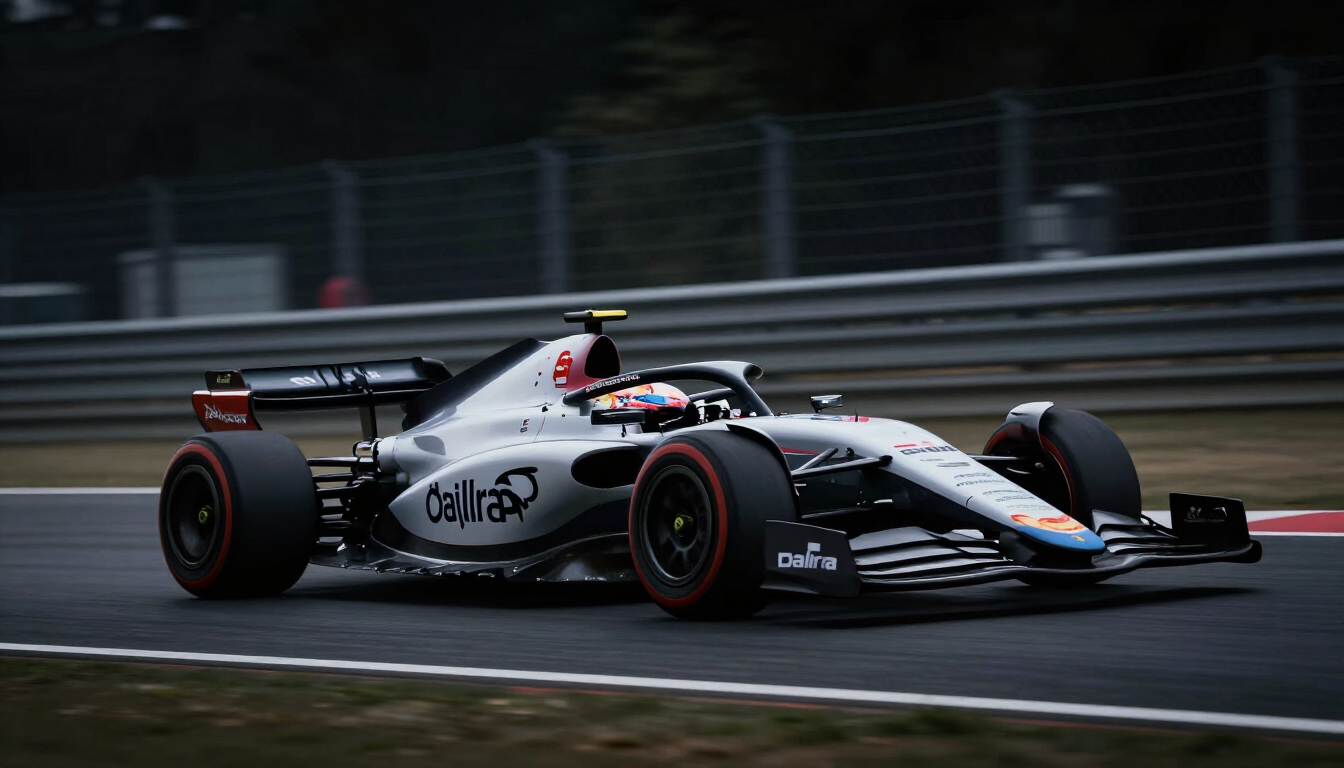
With half the season complete, three Formula 2 drivers have accumulated enough points, pace, and paddock attention to be genuine candidates for Formula 1 evaluation next year.
The shortlisting process for Formula 1 seats is not transparent, but its inputs are. Lap times, qualifying pace relative to teammates on identical hardware, race performance under pressure, physical data from manufacturer assessment programmes, and the judgements of senior sporting directors who watch the junior series more carefully than their public schedules suggest. Three F2 drivers currently meet the threshold on all five criteria.
The first is leading the championship by nineteen points at the halfway stage. More relevant than the points margin is the qualifying data: he has been the fastest F2 driver at five of the eight circuits visited, including two street circuits where setup sensitivity and driver feel for the car's limit are more diagnostic than outright downforce. One F1 team has already run him in a simulator programme. A second has requested his data from the FIA.
The second is third in the championship but statistically the fastest driver in the field over a single lap. His qualifying average relative to the fastest time in his session is 0.12 percent, the smallest gap in the field, and the smallest in the series for three seasons. His race conversion rate is the issue: he has converted six poles to two wins. The championship leader's conversion rate from pole is four from five. For an F1 team assessing whether they are buying a qualifier or a racer, the conversion data matters.
The third is different: not the quickest in the field, but the most consistent. Twelve points finishes from fourteen races, zero retirements, one incident across the season, and a tyre management profile that several teams' data analysts have flagged as comparable to their current F1 drivers. For a midfield team looking for a driver who will score points reliably rather than occasionally fight for podiums, that profile is worth serious attention.
The shortlisting process will accelerate after the summer break. By October, the conversations that are currently technical assessments will become commercial discussions. Two of the three drivers have management teams with F1 relationships. The third does not, which creates a structural barrier that ability alone may not overcome. The shortlist will be longer than three by November. Whether it will still contain these names is the question the rest of the season will answer.
The 2026 FIA Formula 2 Championship standings capture the state of play recorded After Round 9, Budapest. Nikola Tsolov leads the drivers classification on 167 points, 20 clear of Gabriele Minì on 147, with Rafael Câmara third on 145. A lead of 20 points is a meaningful cushion at this stage of the year, but with 5 rounds still to run it is not yet a decisive one. The championship will be settled by how the front runners negotiate the rounds that remain, not by the margin they carry into them.
Behind the leading group the field is tightly compressed. Alexander Dunne holds fourth on 108, Noel León is fifth on 94, and Kush Maini completes the top six on 88. The spread across those three positions is just 20 points, which means a single strong weekend can reshape the order behind the title contenders. The midfield battle is where the championship depth is most visible, and where the cost of one bad round is highest.
In the teams classification, Campos Racing leads on 261 points from Invicta Racing on 187 and MP Motorsport on 176. The teams standings are often the more reliable indicator of outright pace, because they smooth out the individual bad weekends that every driver encounters across a full season. A team that places both its entries consistently in the points will accumulate constructors score at a rate that single car brilliance cannot match.
The depth of the teams championship reflects how competitive the Formula 2 grid has become. Campos Racing holds the lead on 261 points, but the gap to Invicta Racing on 187 is small enough that a single double points finish can close it. Behind them, MP Motorsport sits third on 176, close enough to capitalise if either of the top two stumbles. The constructors race is a long game, and it rewards reliability over heroics.
The recent rounds have done most to shape the current standings. Silverstone at Silverstone, Great Britain was won by Bennett / Tsolov, Spa Francorchamps at Spa Francorchamps, Belgium went the way of Tsolov / León, and the most recent completed round, Budapest at Hungaroring, Hungary, was won by Maini / Câmara. Each of those results shifted the points arithmetic at the top and reset the momentum that the title contenders carry into the next weekend.
The form guide across the recent rounds reads as a study in momentum. Maini / Câmara took the most recent victory at Hungaroring, Hungary, Tsolov / León won at Spa Francorchamps, Belgium before that, and Bennett / Tsolov prevailed at Silverstone, Great Britain. No single driver has dominated the recent sequence, which is why the points lead at the top has remained stable rather than stretching. The closing rounds will decide whether that pattern holds or one contender finally strings together the run of results that settles the title.
The next round is Monza at Autodromo di Monza, Italy, scheduled for 3, 5 Sep. It is round 10 of the season and the first of the closing stretch. How the championship leader handles the specific technical demands of Autodromo di Monza, Italy will indicate whether the current margin is a foundation to build on or a high water mark that the chasing group can erode. Every remaining weekend now carries championship weight.